Tarmac Delays result in first fines

November 21, 2011 on 1:00 am | In Airline News, Airports | 1 Comment

The FAA is going to fine American Eagle airlines a negotiated amount of $900,000 for tarmac delays during a day of storms in Chicago on May 29th.  The storms moved through the area more slowly than anticipated and several America Eagle flights bumped into the 3-Hour window.

This is the first announced fine for breaking the 3-Hour rule and it has some implications in that it sets precedent for other airlines going forward in the future.  My first impression is that this fine was a touch heavy on American Eagle.   It certainly is a non-trivial sum and when you consider the thin margins of a regional airline, it certainly makes an impact.  If every regional flight earned $500 in net profit (and they don’t come close to that in the real world), it would take 1,800 flights to earn that fine back.  Consider that for a moment.

On the other hand, American Eagle is by far the worse violator so far.  It has twice as many of these delays as the 2nd place leader, Delta.  

I think this fine has  huge implications for JetBlue and its violations during the October snow storm.  You can bet that JetBlue will be scrambling to defend itself over those delays.  Sadly, there is quite a bit of public perception already going against JetBlue in that instance and perception can often be a great influence in such fines.

Sunday Trivia: Southwest and International Destinations

November 20, 2011 on 1:00 am | In Trivia | No Comments

Southwest has been working on adding international destinations to its system for several years now.  With the purchase of Airtran, it gained an airline already doing it and it will soon integrate those international destinations into its system as codeshares.  That will be a big moment.

Question:  What airline with international destinations was Southwest’s first experience with international destinations?

The answer after the fold: (more…)

Southwest and Mexico

November 19, 2011 on 1:00 am | In Airline News | No Comments

Earlier this week, it was announced that Southwest/Airtran was *adding* routes from San Antonio to Mexico City and Cancun. Airtran will be the “airline” that services those routes.

Yes, Airtran will grow into some routes.

Fares aren’t announced until regulatory approval is gained. I do wonder if Southwest plans to use the Airtran entity for international expansion. But I wonder about a lot of things when it comes to Southwest lately. Like when are they going to introduce a reservations system that doesn’t require a handcrank?

Those routes are curious to me. Southwest already has its codeshare into Mexico with Volaris but that connection is focused on the West Coast area and it offers flights from the US to Guadalajara with connections onward.

The Mexico City and Cancun flights are smarter flights. Particularly smart from San Antonio. And don’t be one bit surprised to see one added to Monterrey in the near future.

Emirates goes Boeing Big

November 18, 2011 on 1:00 am | In Airline Fleets, Airline News | 1 Comment

Emirates has signed a deal with Boeing this past week for 50 more 777-300ER aircraft with a list value of $18 Billion.   It’s a big deal for Boeing and a big one for Emirates although Emirates is rather used to making big deals. 

Emirates already has the largest fleet of 777 aircraft and they like and use the -300ER very effectively on their routes.  They also have 50 A350-900 and 20 A350-1000 on order.  And let’s not forget the the massive number of A380s still to be delivered. 

That’s a lot of capacity.  Consider that Emirates uses the -300ER in capacities ranging from 354 seats to 442 seats.  I suspect that some of these -300ERs will replace -200LRs which will then be used to replace A340-500s that are not nearly as economical as the -200LRs.  In addition, I think even more of the -300ERs will replace some aging -300/-200 standards currently used for high density flights to cities in medium haul range of Dubai.  That will also reduce the number of Rolls Royce Trent powered 777s in their fleet and convert the focus more fully to GE90 engined 777s.  That said, there will still be quite a few -300ERs coming online as additional capacity. 

Can they fill those aircraft?  Regionally, Emirates serves cities that are mega-dense with populations and make money doing so by cramming as many people into coach as possible.  Globally, Emirates is expanding to new cities in ways that does make one wonder if there is much low hanging fruit left for them.  Take for instance their new flights to cities such as Seattle, Dallas, Buenos Aires, Dublin, Harare, Lusaka and Rio de Janeiro.  Not a one of those cities is a mega dense destination such as those flights they’ve had to cities already served. 

I continue to question the viability of Emirates in light of the evolving landscape for point to point routes around the world made possible by the latest generation aircraft coming online.

This order also gives Emirates a whip to use on Boeing.  Boeing is now talking about what the next generation 777 should look like.  It is a given that we’ll see a new wing and likely new or improved engines as well.   Increased use of composites is also probably a given.  Some think the -200LR gets stretched a bit with the goal of similar range and the -300ER gets stretched more with a goal of more payload over existing range. 

Neither of those configurations necessarily makes Emirates thrilled.  Emirates model is based on high capacity, long range flights and they’ll want to see more range with similar payloads in lieu of more capacity with similar range.  To an extent, neither option is mutually exclusive.  Airlines such as Emirates can configure aircraft for less than high density capacity and get more range.  But only to a point.

This order gives Emirates and its CEO Tim Clark the opportunity to start bludgeoning Boeing into building a high capacity, ultra-long range aircraft that they need and want.  Its become clear that the A350-1000XWB is not going to be that aircraft.  Not the way Emirates wants them.  Emirates will threaten order cancellation if it doesn’t get its way with a definition of those next generation 777s that meets its needs.

Will Boeing crumble?  I think not.  Boeing has rightfully valued Emirates as a customer but also recognizes that meeting the missions of other airlines is more important than just one airline.   It doesn’t like all its eggs in one basket and building an Emirates 777 will result in other airlines being less than enthusiastic for the aircraft.   However, I do think that Emirates can nudge Boeing into more performance overall and that would be good for everyone involved.

Southwest / Airtran Pilots Ratify

November 17, 2011 on 1:00 am | In Airline News | 1 Comment

Am I the only one who missed the pilots of Southwest and Airtran ratifying their seniority agreement? My excuse was a weeklong bootcamp training session at my company. What’s yours?

The highlights are that both groups overwhelming approved the agreement with in excess of 90% of both groups voting and inexcess of 80% of each voting group saying “Yes”.

This is good for Southwest, Southwest’s pilots and Airtran’s pilots. Conflict erodes profits and eroded profits at Southwest hurt everyone’s fortunes. More importantly, there is a template for coming to agreements among other unions.

Furthermore, Southwest can get on with the business of harmonizing and integrating Airtran. The sooner that gets done, the sooner the synergies of the merger are realized.

The question is this: Will the other unions avoid the mistakes that Airtran’s ALPA group made?

Allegiant buys more MD-80s

November 16, 2011 on 1:00 am | In Airline Fleets | 2 Comments

Allegiant Airlines has come to an agreement with Scandinavian SAS to buy 13 more MD-80 aircraft for its fleet. Kind of a yawn announcement, isn’t it?

Allegiant uses the MD-80s and makes a strong profit doing so. They get praised for business model and frugal operating plan and deservedly so.

To a point.

Yes, the capital costs are extremely low. Yes, Allegiant can operate them with density that makes them profitable.

No, Allegiant can’t count on that working for the future. Airtran got started operating extremely old DC-9 aircraft and did pretty well for a time. Then its executives realized that fuel would be an issue and it started buying new aircraft. New, fuel efficient aircraft such as the 717 and 737-700.

Fuel and maintenance costs *will* become an increasing problem for Allegiant. Don’t kid yourselves. The MD-80 aircraft are strong but they are old and they have been ridden hard and put up wet by airlines around the world. That takes a toll.

The smarter move would be to start transition to the *next* cheap aircraft to buy. In my mind, that’s the 737-300. They’re only getting cheaper and they offer a pathway to continue on as an airline. Airlines will be dumping their older 737s in favor of the newest offerings and the older 737s such as the -300 will only get cheaper.

It also offers a pathway into a family of aircraft that can be purchased to fit a variety of needs.

The status quo can be great. But in this case, I think the status quo hurts Allegiant far more than helps in the next 5 years.

The A340

November 15, 2011 on 1:00 am | In Aircraft Development, Airline Fleets, Airline History | 2 Comments

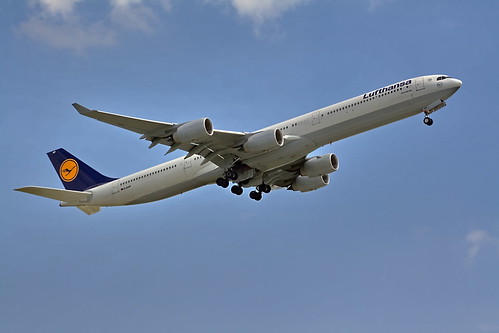
Lufthansa Airbus A340-600(Flickr)

I got asked what I thought of the A340 last week by a reader of FlyingColors and decided to give some thought to that subject and write a post.

The truth is, the A340 was probably the first Airbus aircraft that I really liked visually.   I liked the slender appearance of the widebody fuselage and I liked the four engines and how they were hung on the wing in a proportion that just seemed a bit sexier than other 4 engine aircraft. 

I liked Airbus’ approach to the A340/A330, too.  I’ve always been fond of the parts bin approach to creating value for a customer and the A330/A340 development was certainly that. 

A fuselage that got borrowed from its first twin-aisle aircraft and CFM engines that were derived from the A320 aircraft.  Need a medium range hauler?  Use our A330.   Need a long range widebody?  Try our A340.   Going trans-Atlantic?  Use our A330 and if you’ve got trans-Pacific routes, we have this lovely 4 engine aircraft for you. 

And you got to have pilots that could fly both. 

It was a beautiful approach and a real answer to what was needed at the time.   It was way better than McDonnell Douglas’s offering in the MD-11 and Boeing really didn’t have an aircraft that even fit the needs at all. 

ETOPS was changing the game at the same time, however.  So was engine development.

The MD-11 was a bit flawed in that it really needed a truly new wing and better engines to achieve its mission.  But the ever frugal derivative player, McDonnell Douglas, played things just a bit too frugal.

The 747 was simply a different class of aircraft.  The 767 was too small and too short ranged to fit the gap.

Airbus did a great job with those aircraft in offering a sweet spot solution for both capacity and range and then made a strong business case for both of them by making them as common as possible.  You cannot blame any airline who went that route.  It was, in the context of the times, the perfect solution.

What we didn’t really count on was engine manufacturers being willing to truly make game changer engines and ETOPS going far past anything anyone could envision.  The 777 was born and it was an even bigger game changer.  First an aircraft that solved the A330 problem just a little bit better.  Not fantastically better but it offered just a touch more capacity and bit more cargo capacity and it did it with engines that were more revolution than evolution.

The A330 has survived because of its improved derivatives and any airline using them makes great money.

The A340 got hampered by a few things.  It needed a bit better wing  and better engines (and finally got both in the A340-500/600).  The CFM engines were a great choice going in but the Rolls Royce Trents were the answer to a question that got asked a bit too late.

Airbus bet on 4 engines being preferred for long haul, trans-oceanic routes and given the dominance of the 747 in that market, it wasn’t a bad bet.   Their mistake was in underestimating Boeing’s ability to look forward.  Boeing saw the possibilities in ETOPS and extra high by-pass engines that were more reliable than anyone could have conceived of a generation earlier.  And it should have given its customer base at the time.

Airbus was hampered by a bit of McD disease and by multi-government ownership at the time.  It didn’t have enough capital to go “all in” on designs and knew it had to make its business case on flexibility which meant derivatives.  In fact, it often only got capital for new investment if that investment benefitted its owners in the form of jobs programs for their citizens.

While thinking about this post, it occured to me that Airbus even produced a 747-SP.  The A340-500 derivative.  It could fly fantastic distances but without enough passengers to make it cost effective.   Then the 777-200LR came along and was capable of doing *that* mission better and cheaper.

The 777-200ER and 777-300ER killed the A340 in all forms (And EADS CFO just admitted it in the press).  It could haul more passengers and cargo for the same or longer distances for less money.  It was that simple.  Boeing made the business case on trip costs and won. 

Even if hindsight is 20/20, you can’t say that Airbus made a mistake with the A340.  The A340 killed the MD-11 and exposed the weaknesses of owning 747s.  It did its job very well but it arrived just a little bit too late to enjoy its success for very long.  Timing is everything.

I would criticize Airbus for the A380.  Yes, it has made a few airlines some good money.  It also ignores the model(s) for long haul travel over the broad spectrum in favor of trunk routes.  It will never enjoy the numbers or prevalence of the 747.  On the other hand, neither will the 747-8i. 

I’m not sure the A350 is the answer either.  I don’t think it fits long, thin routes as well as the 787 and its planned derivatives.  I don’t think it fits the long, large capacity routes quite as well as the 777 either.  Its smallest derivative is an A330 replacement at best and I question whether or not it will ever get built.  Its largest derivative so far doesn’t respond to the 777-300 as a game changer either.  They are free to prove me wrong.

It’s not that I think the A350 won’t sell.  It will.  But I think it’s destined to be a player among a fairly small core group of airlines.  Much as the A380 is and will be.  Boeing took a page from the Airbus playbook and built the 787 to fit a nice, broad piece of medium and long haul routes and positioned itself to answer the largest A350 with a next gen 777 or next gen new build large capacity, widebody aircraft.

Boeing one ups Airbus over the next 20 years with its product line up and does it in a way that has the gaps covered in distance, capacity and service. 

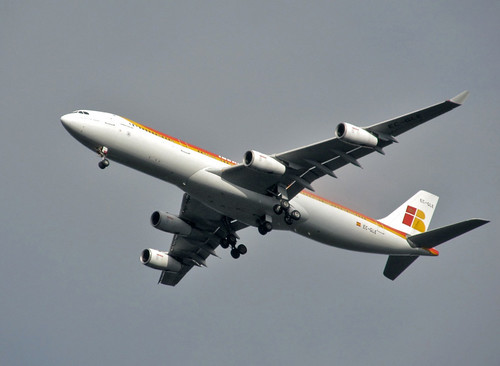
With all of that said, I still think the A340 is one hell of an elegant and pretty airliner.  It lends itself to the great airliner liveries of the world.  Just look at these:

(All images from Flickr under their Creative Commons License)
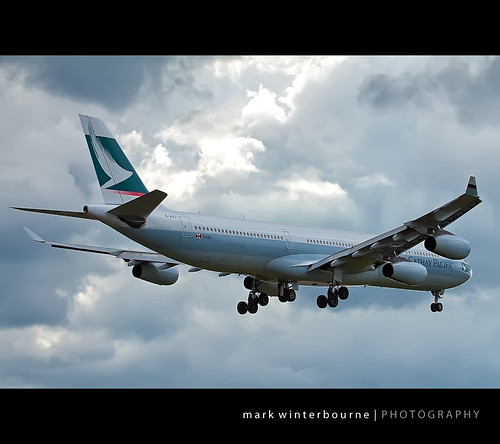
B-HXJ


Etihad

EC-GLE "Concepción Arenal"

G-VGAS

Porn on a Plane

November 14, 2011 on 1:00 pm | In Trivia | 1 Comment

Last week Ryanair did it again by speculating on adding pay per view on their aircraft that could include porn.

Say all you want but there is no way in hell that’s happening in this decade.

And it’s all about the free press. O’Leary did it again and lest you think he’s running out of moves, let me suggest you are wrong.

AA and the APA start to unfold

November 14, 2011 on 1:00 am | In Airline News | No Comments

American Airlines and the Allied Pilots Association have started to unfold in their talks and the best evidence is how both parties have gone back to the media and their respective stakeholders with public messages of complaint against each other.

As long as we didn’t hear much or anything at all, I had a little hope for those two groups. Now? Not so much. They can still surprise me but I think not.

American chose to criticize the union for not negotiating through the weekend and I think that was a move to keep them talking in hopes of wearing them down. Sometimes walking away for a day or two results in better perspective and if the union wants a weekend off, shut up about it.

On the other hand, the APA has decided to describe AA’s offer as “concessionary” and offer that the future of the talks will continue on. This is a change in APA President David Bates’ tone and will tend to coalesce its membership into resisting a contract rather than being open minded.

My prediction? Either AA gets a new contract that serves its interests in every area but total compensation and its costs continue to be an anchor around its neck or . . .

These two groups continue to slug at each for at least another 12 to 18 months. Then that will be the anchor around AA’s neck.

More and more, this is a lose / lose proposition for American Airlines.

Sunday Trivia: Appliances

November 13, 2011 on 1:00 am | In Trivia | No Comments

This will be a tough one for almost all of you out there but here it goes:

What western airline was owned by what appliance family from 1955 until 1962?

The answer after the fold: (more…)

Frontier is looking a bit ugly

November 12, 2011 on 1:00 am | In Airline News | 2 Comments

It was in the news earlier this week that Frontier is laying off an additional 120 people in Milwaukee.   Likely these are more former Midwest employees but the hit hurts just the same. 

It’s another sign of just how much Frontier is bleeding and another sign of just how much Republic Airways is approaching their investment with a lack of enthusiasm. 

Frankly, I thought Southwest was the better suitor for Frontier but I didn’t believe that Republic would lose interest quite that rapidly either.  The truth is, Republic has never shown much enthusiasm for its purchases of Frontier and Midwest.  They blame high fuel prices for their problems.  I blame a lack of expertise in running a brand airline, getting rid of the expertise that did come with Frontier and just not really going “all in” with their purchase.

There is now speculation that there will be no interested buyers for Frontier and it is hard to argue with that.  There is a tiny bit of speculation that Frontier could be of interest to JetBlue largely because of fleet commonality and, somewhat, service commonality.

Going up against Southwest and United in Denver is not for the faint of heart.  I don’t disagree that jetBlue could be interested and I do think there is some “fit” there.  I also don’t think JetBlue has enough guts to make such a purchase.  They have signaled their complete happiness with being the airline they are today and have made little effort to grow into new markets.  Denver certainly isn’t an attractive market for the risk adverse management of JetBlue.

But another airline does come to mind.   Virgin America.  The fleet commonality works and they *are* being smart about competing with legacy airlines.  I don’t think you would see Frontier in Milwaukee for very long or quite as much flying in Denver either.  But I think Virgin America has an aggressive enough management cadre to figure out how to make Denver profitable and how to use the remaining fleet to enter into other profitable markets quicker.

The real question is whether or not Virgin America could even financially swing such a deal given how much Frontier is burdened with debt.

Calling Captain Doug Morris

November 11, 2011 on 1:00 am | In Trivia | 7 Comments

Does anyone know what has happened to Captain Doug Morris’ blog:

http://www.fromtheflightdeckbook.com/

It’s no longer *there* and just disappeared really without notice.

Is Fuel A Threat?

November 10, 2011 on 1:00 am | In Airline Fleets | 2 Comments

Every airline reporting on its quarterly financial performance last month cited fuel as a major impact to their bottom line.  Airlines saw significantly higher fuel prices this year compared to 2010 and it’s true that it’s a hit to profits.

On the other hand, it’s notable that fuel hedging contributed significantly to their losses on paper.  Why?  Because fuel prices did not go up high enough for those fuel hedges to provide benefit.  Instead, they went down.

The truth is, it isn’t high fuel prices that are killing airlines.  It’s the price volatility that hurts them.  Airlines haven’t been able to plan their costs very effectively for the past 3 years.  Hedging is supposed to “smooth” that volatility and it will except that it also causes paper losses which reflect negatively on the airline when it announces its financial performance.

Is it necessary?  I used to think so.  In fact, I was a big advocate of fuel hedging not because of the windfall profits it provided many airlines for many years but, rather, because it really did make costs stable.  US Airways has stopped fuel hedging and their financial results show that fuel hedging just may not be necessary anymore.  Their profits are not taking a hit from hedging contracts that “lose” money.

In fact, US Airways performance is exceptional when balanced against the challenges it has.  This is an airline that 6 years later is still effectively operating as two airlines (under one name).  It still doesn’t realize that kind of synergies it needs to from its merger.  It has serious impacts from labor groups who cannot agree on what day it is much less on who represents them with the company (this would be the pilots) and it still doesn’t have a combined seniority list with one agreement in place with both the pilots and the flight attendants. 

This airline also flies from far less popular hubs, contracts with far less ideal regional airlines and has far fewer international flights and even if it could fly more international routes, it lacks the equipment to do so.

But the airlines makes a strong profit.  As strong or stronger than the SuperLegacy airlines.  The one thing it hasn’t done is announce major paper losses as a result of fuel hedging.  It might be time for more airlines to roll with the punches.  It’s a highly complex, risky effort that doesn’t appear to be providing the benefits its supposed to.

Fuel price volatility will continue to be a problem.  Airlines need stable oil prices and, frankly, so do the world economies.  However, let’s not forget that fuel is a problem for *every* airline.  They all enjoy the same problem in this area. 

I expect that we will see airlines focus more and more on fuel economy over the next several years.  We’re already seeing it in some airlines such as American Airlines who has finally realized that if it dumps its MD-80 aircraft, it can not only enjoy double digit improvements in fuel efficiency, it can fly more people as well.  That doesn’t mean that airlines with Next Generation 737s or Airbus A320 series aircraft will be dumping their fleet for new aircraft.  They won’t.

It does mean that we’ll see older aircraft from the 70’s and 80’s going away.  Yes, that means MD-80s but it doesn’t mean MD-90s (which use a far better engine).  The other aircraft it points to are those that many may not have considered. 

The 767-200ER is already clearly a candidate for removal and the 767-300 isn’t far behind it.  These are 1970’s design aircraft and with engines of similar caliber.  There are no more improvements and as fuel climbs, these aircraft become quickly unattractive even when completely paid for.  The 757 is entering into this territory as well.  I would expect that we’ll see a number of these begin to be retired or sold off for cargo work.  Again, these are 1970’s aircraft and while their amazing performance lent them a lease on life, they’ve become very expensive balanced against other aircraft that can perform 90%+ of the same missions.

Say goodbye to the older 737s.  I’m talking about the 737-300/400/500 series aircraft.  These are efficient, for their time, but very inefficient when compared to the latest modesl coming off Boeing’s line.  They had a short extension to their usefulness but you will see these depart rapidly from US based fleets over the next 1 to 3 years. 

The oldest A320 series aircraft are now due for replacement as well.  Some are older than those inefficient 737-300 aircraft and no longer have the fuel efficiency that the latest Airbus offerings possess.  They *seem* like a new aircraft.  I’ll point out that the A320 aircraft started deliveries in the late 1980’s (1988) and several US airlines such as United own some of the oldest models. 

Look for airlines to “upsize” their aircraft.  Southwest is doing this by buying the 737-800.  For a tiny bit more in costs, Southwest can fly significantly more passengers on routes that are seeing enormous demand.  They can make more money for a tiny incremental cost in fuel and one additional flight attendant. 

Finally, buying blocks of the A320NEO and 737MAX will make an airline look smart.  It is universally recognized that while oil prices may one day stabilize, they won’t return to $20/barrel.  The airline with the most fuel efficient aircraft will see an advantage.  That’s why I honestly believe we’ll see a large order from Southwest Airlines for the 737MAX.  It’s a good evolution for the airline and it will continue to fit within its business plan for some time to come. 

Why no orders from Southwest yet?  Because Southwest is one hell of a good negotiator and recognizes that they have power in the simple fact that if Southwest buys the aircraft, it’s an endorsement that everyone will pay attention to.  I expect to see an initial Southwest order for 100 to 200 aircraft sometime in the next 6 months.  Southwest will get its deal and Boeing needs Southwest to stamp approval on the MAX.

Happy Birthday

November 9, 2011 on 9:00 am | In Trivia | No Comments

Happy Birthday to my father, Neal J. Robinson, former EVP of Braniff International and the man who got me intersted in this airline world.

Ryanair and the COMAC C919

November 9, 2011 on 1:00 am | In Airline News | 2 Comments

Ryanair says that it may buy or lease used aircraft to fill its gaps until the COMAC C919 arrives in 2018 with a 200 seat aircraft. 

I say that that statement is Ryanair standing up and yelling “Look at me!  Look at me!” to Boeing and Airbus.  ]

While Ryanair says its dead serious about this aircraft, they conveniently do not rule out striking a deal with Boeing or Airbus on their aircraft and I would point out that China has yet to produce a viable commercial aircraft . . . ever.  They are getting closer and I do believe that China will one day manage to succeed. 

However, their ARJ21 is a non-starter since it is heavy and, you know, no one has really ordered it except Chinese airlines who were told to order it.  Building a first time, competitive single aisle mainline aircraft requirese a body of experience that China doesn’t have.  Brazil has it.  Arguably Japan has it.  Canada even has it. 

China doesn’t. 

So why should Boeing or Airbus feel threatened by Ryanair’s moves?  They shouldn’t.  Sooner or later, Ryanair will have to make a move on a next generation 737MAX or A320NEO.   And they will get a good deal but gone are the days of getting a deal where you can buy a 737-800 and sell it in 3 years to *make* money on the sale.  Neither manufacturer are, in the least, that desperate.

Bye Bye BMI

November 8, 2011 on 1:00 am | In Airline News | No Comments

It’s being reported that Lufthansa is in negotiations to sell its BMI subsidiary due to losses its incurred as a result of unrest in North Africa where BMI has a strong presence.  BMI’s real asset is slots and guess who wants them. . .

International Consolidated Airlines Group S.A

Better known as British Airways / Iberia.  Lufthansa and International Consolidated Airlines Group S.A have come to an agreement in principle and are negotiating the details now.  Virgin Atlantic was reportedly interested in this purchase as well but struggled to raise the financing to make an offer.

Concluding this deal would, on the surface, give International Consolidated Airlines Group S.A control of 53% of London Heathrow slots and I think this couldn’t be worse news.  It would mean that British Airways would effectively control the airport and with now additional capacity being added at Heathrow, I think we would see a shutout of meaningful competition. 

Yes, it’s almost certain that International Consolidated Airlines Group S.A would sell off some slots to some airline(s) such as Virgin Atlantic to make the deal palatable for regulators but the amount that would be sold off to make someone happy would pale in comparison to the hold it would have over the airport.

Europe would be wise to nix this deal in favor of other, better competition.

Frontier: Viable?

November 7, 2011 on 1:00 am | In Airline News | No Comments

Frontier Airlines has lost $90 million in the first half of 2011 and parent company Republic Airways has announced plans to try to staunch the losses with layoffs and reconfiguring aircraft.

The losses are attributed to high fuel costs but I have to call nonsense on that.  Every airline has experienced high fuel costs and many have higher labor costs than Frontier.   I think the problem is an unfocused strategy that has involved competing in Denver on price alone and using any aircraft Republic Airways doesn’t have a use for with another airline.

Frontier has potential and real value but only to people who know how to run such an airline.  Frankly, I think that one of the best things that could happen is Republic selling the business to someone else.  JetBlue would be an excellent fit and, frankly, I don’t think you could even get Southwest glance in its direction now. 

But that window is *barely* open right now and it closes if Frontier loses anymore ground in its fight.

Growth: The 737

November 6, 2011 on 11:29 am | In Trivia | No Comments

The 737 Next Generation Series is the most capable single aisle airliner being built today.  The 737-700 has a true transcontinental capability and the 737MAX aircraft may have trans-Atlantic capability when it is defined and built.

Question:  What was the range and passenger capacity of the first 737-100?

The answer after the fold: (more…)

600 commitments but no beef yet.

November 5, 2011 on 1:00 am | In Airline Fleets, Airline News | No Comments

Boeing now claims 600 commitments to its 737MAX re-engined airliner and that’s fairly impressive despite the fact that we know that 100 of those come from American Airlines.  But who else is buying is largely a secret so far.  Remember, Delta didn’t order the MAX.  It ordered the 737-900ER citing its needs being more immediate than the entry into service for the 737MAX.

600 commitments to a paper aircraft is pretty good for an airliner so recently announced.  Since Boeing is fairly honest about what it considers an order, we can presume that these “commitments” are formalized in some manner such as orders and/or letters of intent. 

But what is the aircraft.  4 months after hearing that the airliner existed when American Airlines announced its order, we still don’t know much at all about this airplane.  We’ve heard promises that have the 737MAX outperforming the Airbus A320NEO but . . . that’s all they are.  Promises. 

So far, we have no firm definition of what this aircraft really will be.  As the Wendy’s commercial asks:  “Where’s the beef?”

JetBlue’s rather blue performance last week

November 4, 2011 on 1:00 am | In Airline News | No Comments

Once again, jetBlue managed to mangle handling somewhat unexpected severe winter weather last week and let several aircraft stand on tarmac in Connecticut while an early winter storm passed through the New York City area.   One aircraft already famous in the media managed a 7+ hour sit while the pilot begged for assistance from the airport.

And JetBlue has apologized . . . again. 

Thing is, should they really have been caught out this badly again? 

JetBlue already had a famous JFK system meltdown several years ago.   In fact, it managed to get David Neeleman fired from his job as CEO of the airline. 

I’m not saying that the winter storm wasn’t a bit early.  It was.  On the other hand, it wasn’t *that* early for the northeast and, more importantly, one would expect JetBlue to have a better action plan already in place no matter what time of year it is. 

After all, it is not like that area doesn’t get severe storms in the summer forcing diversions as well. 

I think JetBlue just kind of fumbled again and used a rather sedate apology  and the circumstances to justify what happened.  They certainly have been quiet about what they were trying to do to better help their customers.  And the ATC recordings of its pilots asking for police (to settle passengers) and help in getting people off the airplane doesn’t speak to JetBlue trying very hard to figure out what to do for these people.

Yes, American Airlines also had a long tarmac delay at the same airport.  They also worked diligently towards getting customs people to return to the airport to facilitate getting people off the plane.  You can’t blame them if those same customs people didn’t exactly work very hard at returning.  In short, American has a valid excuse and some significant evidence that they worked the problem hard.

I’ll also point out that it isn’t just JetBlue and American Airlines that flies frequently into the area.  United Airlines, Delta Airlines, Southwest Airlines and several others all managed their problems acceptibly in a variety of ways. 

So JetBlue can apologize but I’ll make a point:  If David Neeleman were still there, he wouldn’t have permitted this kind of thing to happen after the Great Winter Snafu of 2007.  He is a human being and he does make mistakes but he also possesses the characteristic of not repeating those mistakes. 

How ironic that Mr. Neeleman continues to live in Connecticut right between JFK airport and Hartford, CT.

Copyright © 2010 OneWaveMedia.Com

windows xp product key

windows xp product key

winrar free download

winrar free download

winzip activation code

winzip activation code

windows 7 ultimate product key

windows 7 ultimate product key

winzip registration code

winzip registration code

windows 7 activation crack

windows7 activation crack

download winrar free

download winrar free

free winrar

free winrar

windows 7 product key

windows 7 product key

winzip free download full version

winzip free download full version

free winzip

free winzip

windows 7 crack

windows 7 crack

free winrar download

free winrar download

windows 7 key generator

windows 7 key generator

winrar free

winrar free

winzip freeware

winzip freeware

winrar download free

winrar download free

winzip free download

winzip free download