Captain Sullenberger Says He Isn’t Earning Enough

February 26, 2009 on 1:00 am | In Airline News | 26 Comments

In some ways, it was almost inevitable that Mr. Sullenbeger would damage his image, at least in my eyes.   Fox News has this story where the US Airways captain claims he has to work a 2nd job and 7 days a week to maintain a “middle class” lifestyle. 


Now, it is well known that US Airways (East) pilots have taken several cuts in pay and a hit on their pension over the past several years.  There is no argument that being a captain at US Airways no longer is quite the lucrative job it once was.  However, a senior pilot, a senior captain such as Chesley Sullenberger is only struggling to be “middle class” if he’s a fool with his money. 


Let’s take a look at the pay for a senior (such as Captain Sullenberger) captain at US Airways under the “EAST” (or original US Air) contract.  Captain Sullenberger is earning well in excess of $120 / hour as an A320 captain.  Taking a look at United Airlines, their compensation is just over $130 / hour for the same senior captain flying the same aircraft. 


The captain would argue that while that hourly seems high, there are many hours worked for which they don’t get paid.  And I agree.  Let’s say Captain Sullenberger has 6 flight hours on a particular day.  That works out to $750 for that day’s work.  If he flew 6 flight hours, he probably has about 10 hours of what we would consider real work time.  So, $750 / 10 is equal to $75 / hour in “real” pay.  If Captain Sullenberger is working 85 flight hours per month (and about 120 hours of “real” time per month), then he’s earning a base annual salary of about $127, 500 not including health and other benefits.   The truth is, Captain Sullenberger is probably earning a bit more than that annually if he schedules himself for good trips.  Call it about $140,000 / year not including health and other benefits.


So, Captain Sullenberger is probably flying about 1080 flight hours per year and  experiencing about 1512 “real work hours” per year.  The average full time employee in the United States works about 2000 hours per year and has a medium income of less than half of Captain Sullenberger’s salary, enjoys no pension although perhaps a 401(k) and medical insurance that wouldn’t approach Captain Sullenberger’s medical benefits. 


Somehow, I don’t feel sorry for Captain Sullenberger’s misery in maintaining his “middle class” lifestyle.   We all have been hurt in our retirements.  We all make investments in our education and career and few of us experience the kind of job security that a senior US Airways captain enjoys even today.   And to portray oneself as “struggling” with such pay and a need to have a 2nd job is a bit insulting to a great majority of Americans who are truly struggling to maintain any lifestyle.

Turkish Airlines Crash in Amsterdam

February 25, 2009 on 8:29 am | In Airline News | No Comments

Update:  BBC reports that the flight number of this aircraft was TK Flight 1951.


CNN is reporting that a Turkish Airlines 737-800 crashed while on approach to land at Amsterdam’s Schipol Airport.  The plane broke or cracked into 3 distinct pieces after coming down in a farmer’s field near the airport. 


9 people are reported dead and as many as 50 people are reportedly injured.  The flight was carrying 127 passengers and 7 crew members.  At this time, there is little or no speculation on what may have caused this accident.


US Airways drops beverage charge

February 23, 2009 on 11:39 am | In Airline News, Airline Service | 1 Comment

CNN is reporting that US Airways has dropped its beverage (non-alcoholic) charge for coach passengers citing negative perceptions of its brand. While i did think it reflected negatively on US Airways, I am, to some degree, surprised that they dropped the charge. 


This charge has been in place for quite a long time and while other airlines declined to adopt it, it had been reported that US Airways’ a la carte pricing was working well and that presumably included the beverage charge.  It was a bit of an extreme in the airline world to charge for things such as soda, water and coffee but there had been numerous reports that it was also working acceptably well.   Some reports portrayed it as reducing workload for US Airways flight crew and that most passengers had accepted it with little reaction.


I can only conclude that US Airways has made this decision as a result of evidence that it was affecting their bookings in some way.  Indeed, for those business travelers now relegated to traveling in economy, it may well have been responsible for driving decisions on who to fly when a choice presented itself. 


However, I don’t think this spells the end of a la carte pricing among the airlines.  A way to manage revenue and improve profitability has revealed itself and airlines will continue to avail themselves of it in the future.  Airlines will probably adjust their pricing according to market conditions but expect things like luggage fees and blankets for sale to continue.

MSP, LGA, BOS and what’s next?

February 21, 2009 on 12:41 pm | In Airline News, Airports | No Comments

First, let me apologize for the dead silence on the blog.  I’ve been very ill and way overtaxed at my day job for the past week.  I feel better and my work load is manageable again.


Southwest Airlines has announced in fairly quick succession service into 3 airports that, traditionally, Southwest has not wanted to fly to.  Minneapolis / St. Paul, New York La Guardia and now Boston’s Logan airport.  Southwest purists are no doubt predicting Southwest’s demise and Southwest fans are no doubt cheering Southwest’s cheekiness. 


The fact of the matter is that Southwest is evolving again.  Like every other successful airline, Southwest has evolved at important moments in the airline business.  Oddly enough, Southwest really started out as more of a businessman’s airline than anything else in the early 1970’s.  It served the Texas businessman with routes to Texas’ major cities with high frequency and low fares.  By basing themselves at inner city airports (in Houston and Dallas anyway), they made themselves more convenient for those travelers.


Then they evolved to a regional airline serving more than just businessmen but also increasing their market share by becoming attractive to the people who wouldn’t have flown but for Southwest’s low fares.  They became the Low Fare airline through the 1980’s. 


Then in the 1990’s, they began to evolve again.  This time they became the continental airline.  A low fare but not Low Fare airline that instituted service to major and minor cities throughout the US that were underserved with low fares.  This saw growth on both coasts of the United States and mid-west.


Well, the airline industry, for Southwest anyway, has changed again and instead of ignoring those changes, Southwest has clearly decided to evolve once more.  Mind you, I don’t know if this next evolution will be successful.  Only time will tell.  But it shows that Southwest is indeed paying attention to its business.


This next evolution is really about the business traveler.  It doesn’t mean Southwest is giving up on being a low fare airline.  It means that Southwest recognizes that in order to grow its business, it is time to serve new(er) demographics such as the business traveler (again) and the markets those travelers want to fly to.


This was first evidence by Southwest remarketing its same day fares as a kind of Business Class fare.  Smart because that really is what they are.  Then they began to rework their gates at various airports to better serve that business traveler by offering outlets to plug laptops and cell phones into, offering better and more comfortable seating and some variation on priority boarding. 


Now I think Southwest is identifying important markets that their loyal business travelers need to access.  Their Mid-Atlantic customers need to get to places like New York City and Boston.  Their Mid-Western customers need to get to places such as Minneapolis / St. Paul and Denver.   So Southwest has began working to serve those markets.


There is one glaring omission so far and that is Atlanta.   Most pundits believe that Southwest will never enter the market fearing Delta and Airtran’s response.   While I agree that the reaction by those two airlines will be fierce, I also think it is inevitable that Southwest find a way to fly there some day soon.  Will it be a focus city?  No, probably not. 


It is the most important city in the Southeast that so far goes unserved by Southwest.  With a strong customer base in Florida, Alabama, Tennessee, Lousiana, Texas, Arkansas, Virginia, North Carolina, Ohio, Pennsylvania, Indiana, Illinois and Missouri, of course they need to find a way into Atlanta.


And they will.  It won’t be a big start.  Just as Boston, La Guardia and Minneapolis / St. Paul have all been announced as very small operations, so will Atlanta.  But Southwest will find a way to connect Atlanta to their focus city system in short order and begin serving those routes for their business customers. 


There are a few other cities I’m looking at for Southwest service in the next couple of years.  Charlotte, North Carolina would be a good destination and so would Colombia, Greenville and Charleston South Carolina.  Milwaukee, Wiscsonsin should become attractive too.  Why?  Because they have important routes to places like Minneapolis, Atlanta, Washington D.C. and into other parts of their network.


Southwest isn’t crazy.  They aren’t desperate and they aren’t misguided.  Gary Kelly, the new CEO isn’t behaving stupid or incautious.  Southwest is simply evolving again.  With each evolution, there comes risk but to Southwest’s credit, they have identified where they can grow effectively and they’ve even recognized the risks and challenges involved.  They feel prepared to take on those risks and challenges and I suspect they are ready.


Passur Simulation of Flight 1549

February 10, 2009 on 1:31 pm | In Airline News, Trivia | No Comments

Passur, a company that does aircraft and airport real time tracking, has created a simulation of US Airways Flight 1549.  It really is stunning.  You can see it HERE.

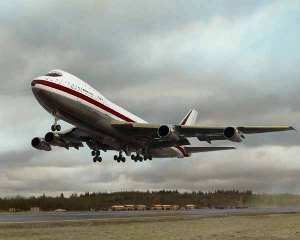
Happy Birthday 747

February 9, 2009 on 10:41 am | In Airline Fleets, Airline News, Trivia | No Comments

Happy Birthday 747

photo credit: Boeing photo 

Today is the Boeing 747’s 40th Birthday. Or, at least, I count it as such since today marks 40 years since the legendary jumbo jet took its first flight.


Bransons Says It Is United That Will Go

February 7, 2009 on 12:32 pm | In Airline News, Airline Service | 1 Comment

USA Today’s Today in the Sky Blog is reporting that Richard Branson, billionaire backer of V Australia (Virgin Blue) as well as Virgina Atlantic, Virgin America and Virgin Nigera has pronounced that one of the new or future competitors on the US – Australia routes will have to drop out.  I myself predicted someone would have to fall out in this post HERE.  The difference is that I predicted it would be United or V Australia. 


I agree that United Airlines is probably the most vulnerable on this route system but even United has something that V Australia doesn’t and that’s a network feed.  United can route its considerable network to flights departing for final destinations in Australia and that’s tapping a country (the United States) with a population of over 300 million. 


V Australia, on the other hand, does have the network feed from Virgin Blue but it pales in comparison to QANTAS and it has no firm partners in the United States at present.  (I don’t count a very weak agreement to sell seats on Alaska Airlines from Los Angeles to Seattle.)  Even if V Australia entered into an agreement with its US cousin, Virgin America, it still isn’t tapping into a major network.  Virgin America can feed some traffic from major cities and that’s good but those major cities (New York, Bostin, San Francisco) are exactly where their competitor may be strongest.  United has the San Francisco market, QANTAS and Delta has both NYC and Boston covered. 


QANTAS also has the powerful OneWorld alliance to help as well.  Airlines such as American Airlines help feed it traffic from their networks to destinations in Australia.  V Australia has no such alliance or even a single dominant partner.  Delta, on the other hand, has never flown to Australia but has a huge network in the United States, modern equipment to fly to Australia and a will to do so. 


After 2 to 5 years, I would expect QANTAS and Delta to be the dominant airlines on these routes and potentially the only airlines.  I agree that United may well be the first to go but I don’t think V Australia has that much greater a chance of sticking out to success. 

Sud Aviation Caravelle – The First Short/Medium Range Jet

February 6, 2009 on 8:38 pm | In Trivia | No Comments

Lots of time gets spent reminiscing over the DC-9 and the 727.  Both were the first examples of a short to medium range jetliner for the United States and even the British BAC-111 and Hawker Siddley Trident get remembered for some good.  But the first real twin engined, short to medium range jet was actually the French Sud Aviation Caravelle.


The prototype was first rolled out in 1955 and just one year after the Boeing 367-80 prototype that was later evolved into the Boeing 707.   The first Caravelle was powered by a Rolls-Royce Avon jet on either side of the fuselage at the rear.  Because of the rear engine placement, the horizontal stabilizer was moved half way up the tail in what might best be described as a semi-T-tail. 


One other little known fact about the Caravelle is that it had the same nose section as the DeHaviland Comet and Sud paid a royalty to DeHaviland for each one.  Somehow that nose looked just a bit more sporty on the Caravelle.


The Caravelle was also the first aircraft to have spoilers and thrust reversers which allowed Sud to do away with the parachute braking they employed on the first 4 iterations of the aircraft.  It was expensive and time consuming to repack parachutes for the aircraft but necessary given the rather short runways at some of Europe’s airports.


United Airlines was the only U.S. based airline to buy the Caravelle.  They favored the Caravelle VI-R (R for reverse) that now sported jet engines capable of over 12,000 lbs of thrust.  It was used on New York City to Chicago routes and some were actually outfitted as men’s only flights that operated more as flying lounges than commuter aircraft.


The first Caravelles carried a maximum of 80 passengers for a maximum stage length of about 1000 nautical miles.  The first stretch offered passenger capacity of about 95 and the second had a maximum of 105 passengers.  The last models were capable of 140 passengers in an all economy (for the time) configuration. 


Not only did the Caravelle parallel the DC-9 in capacity in various guises (the original DC-9-10 carried about the same number of passengers, was about the same length and used engines of similar thrust from Pratt & Whitney), it was also very nearly built by the Douglas Aircraft Company.  Douglas did spend some time marketing the Caravelle in the United States but later chose to develop their own DC-9 based largely on the configuration(s) they marketed for Sud Aviation and their Caravelle.


The Caravelle was purchased by GE and engined with the infamous GE CJ-805 engines that were also used on the Convair 880 and which were responsible for great gasping clouds of smoke on take-off.   This made an order by TWA possible for 20 aircraft since TWA also had ordered the Convair.  An order that was later canceled due to financial problems.  When TWA was capable of making another order, the DC-9 was available and the Convair had already begun to fall into disrepute.


The final models were powered by the Pratt & Whitney JT8D engines  rated at more than 14,000 lbs of thrust.  The same engines that would power both the DC-9 and Boeing 727 for production runs that would last decades.


The last Caravelle, the Super Caravelle 12 saw only 12 examples built for the charter market but were seen flying in Europe as late as 1996.  Ultimately they fell out of favor with the institution of Stage III noise regulations. 


With speeds in excess of 525mph, passenger capabilities that matched anything offered in the United States and engines that are still known today for reliability and power, it is remarkably surprising that only 282 examples were built and that the only US Airline to use them was United Airlines.  It was an aircraft that matched its competitors in every way.

Mobile Website for Mitchell Airport

February 4, 2009 on 10:00 am | In Airports | 1 Comment

Mitchell who?  Only airline aficianados, residents of MIlwaukee and airline employees generally know that Milwaukee’s airport is General Mitchell International Airport.  Named after General Billy Mitchell.


According to USA Today’s Today in the Sky Blog, they’ve launched a new mobile-friendly website at:  http://mobile.mitchellairport.com/


This is a good idea and one that I hope many other airports will follow.  Frankly, most airlines could stand to have a mobile friendly website.  While some claim they do, the only truly mobile friendly site I’ve seen so far is Continental’s

Sao Paulo Brazil

February 3, 2009 on 8:47 am | In Airline News | No Comments

I received the NetSAAver Fares from American Airlines today.  Sao Paulo, Brazil is on special for just $428 each way.  Now, yes, that is still a lot of money but it’s cheap for the route and this is a great time to visit Brazil. 


The next most interesting destination is Paris, France for $289 each way.  I once flew to Paris, stayed for 50 hours and flew back to Dallas.  It was worth every penny at $600 round trip.  It was actually an unplanned trip.  I bought the ticket and left the next day.  I went for the ’99 to ’00 Millennium New Year’s Eve on the spur of the moment.  Would I do it again?  You bet.  Even without some special event?  Absolutely. 

Airplane Spotting at DFW in January

February 1, 2009 on 1:00 am | In Airplane Spotting | 4 Comments

I got a new Olympus SP550-UZ camera at Christmas time. With 18x optical zoom, it was a huge improvement over my previous camera, an Olympus C2100-UZ. But after testing it out at DFW at the end of December, I realized I needed just a hair more “oomph” and bought an Olympus TCON-17 1.7x teleconverter. That did it.

Plane spotting at DFW is always a bit boring for long stretches because you get to watch American Airlines’ MD-80 and B737 aircraft land all day long with very few other airlines to break things up. On this visit, I managed to catch the AA PinkRibbon Susan G. Komen Embraer RJ once more. I captured a Sun Country Airlines 737, an Airtran 717 and a Lufthansa A340 all taking off or landing on the far runway from Founder’s Plaza. Previously, they would have been a tiny spec in my camera.

I also saw a hawk standing in the field at the foot of the runway watching both us, the spotters, and the aircraft landing. It seemed like it wondered what the big deal was. One of the DFW fire trucks came by on the service road and goosed his fire pump as he went by much to my surprise. I just happened to be taking a photo of him anyway and got the water spraying out although only close up instead of from far away.

The other catch was a China Airlines Cargo B747-400. We visit a secluded area to shoot from that requires us to drive past the air cargo area on the west side of the airport. As we drove by, we saw this huge aircraft parked and pulled over to take photos. While doing so, I noticed it was buttoned up completely and running its APU and figured it would be taking off soon. It did but took nearly an hour to do so.

We also saw three corporate jets take off one after the other. You can see them HERE, HERE and HERE. Both my wife and I had the odd feeling of almost a race the way they took off and quickly turned south by southeast. About 20 minutes later, my wife guessed it. They were the wealthy taking off for Tampa and the Superbowl. I’m sure she is right. They took off so fast that I was only able to get one good photo of each.


Take a look at this PHOTO.  The aircraft seems to either be coming straight at me or aimed just to the left of me.  In fact, the runway was to the right of me.  The crosswinds for that runway (13R-31L) must have been pretty high today.

One final observation. I’ll be sorry to see the Northwest Airlines livery fade away into Delta. Northwest has, in my opinion, one of the handsomest liveries on a US Airliner and it is a shame that Delta isn’t even retaining some small portion of the logo.

You can view all of the photos HERE.

Copyright © 2010 OneWaveMedia.Com

windows xp product key

windows xp product key

winrar free download

winrar free download

winzip activation code

winzip activation code

windows 7 ultimate product key

windows 7 ultimate product key

winzip registration code

winzip registration code

windows 7 activation crack

windows7 activation crack

download winrar free

download winrar free

free winrar

free winrar

windows 7 product key

windows 7 product key

winzip free download full version

winzip free download full version

free winzip

free winzip

windows 7 crack

windows 7 crack

free winrar download

free winrar download

windows 7 key generator

windows 7 key generator

winrar free

winrar free

winzip freeware

winzip freeware

winrar download free

winrar download free

winzip free download

winzip free download