|
June 14, 2012 on 1:00 am | In Airline News | 1 Comment
A few weeks ago, American Airlines conceded publicly that it would examine all options for exiting bankruptcy rather than just the stand-alone approach it had been evangelizing up to that point. This was due primarily to the campaign for merger that US Airways has been engaged in and the unsecured creditors committee desire to see all options reviewed.
Since that time, there have been quite a few indicators that American Airlines simply paid lip service to the court of public opinion without actually engaging in the act of reviewing merger potential. PlaneBuzz made mention of an internal town hall put on with CEO Tom Horton and the view that Horton isn’t acknowledging that a merger decision or any decision on AA’s exit from bankruptcy lies really at the hands of the bankruptcy judge and the unsecured creditors committee. In short: Once you’re in the bankruptcy court, your control over your destiny is very limited.
In addition, AA has proceeded in its talks with unions with the clear intent to win its Section 1113 motions to abrogate the union contracts. What I mean is that they haven’t made progress with the unions although I’ll concede that they have so far managed to engage the pilots enough that they are returning to the negotiation table. However, they largely went through the motions with the unions by all accounts.
CEO Tom Horton was in Beijing for the IATA conference and was quoted by Bloomberg saying: “We’re very focused on restructuring independently,” Horton said. “That has to be our focus now and anything else for the time being is a distraction.”
The problem with these developments is that the UCC (Unsecured Creditors Committee) for this bankruptcy is the one that forced AA to publicly acknowledge that it will examine all options and statements and actions like those on Horton’s part speak loudly to so far ignoring the wishes of the UCC.
And it’s notable that a large part of the UCC is made up of AA unions. The bankruptcy judge has made it clear that even if union contracts are dissolved, American Airlines still has to do a deal with the unions and unions still have to get a new contract in place. His message is that the two parties better start figuring out how to make things work under the legal framework that will continue to exist or both sides are in trouble with respect to a successful outcome. US Airways having top level agreements in place with AA unions shows at least a willingness to get a deal done that hasn’t existed at AA in more than a decade.
I will note that American Airlines does seem to be trying hard to come to terms with others on the UCC to kick the legs out from underneath US Airways. They have managed to come to terms with HP over terminating HP’s development of AA’s new passengers service system that was to be called JetStream. New IT VP leader Maya Leibman has now indicated an AA preference for buying a new system off-the-shelf and adapting AA business practices to the system rather than building a one-off system to meet the business practices of AA. That isn’t exactly the wrong direction at this point. There is less risk involved and it at most brings AA at the level of Delta and United.
HP has plenty of horsepower to offer in passenger reservations anyway. It operates the SHARES system already, for instance, and that is the one that United adopted from Continental.
But how do other creditors view advantageous terms being agreed upon with key members of the UCC? What is a union response to another UCC member getting a quick resolution vs their own membership? And can AA pull off a similar deal with Boeing and Airbus that keeps those orders on the books and Boeing happy as a member of the UCC? Maybe. Then again, maybe US Airways waves a follow on order for more Boeing aircraft to replace aging Airbus equipment? You never know.
At the end of it all, one doesn’t sense that AA has done anything to explore other options that involve mergers. To the contrary, one senses that they have retrenched and gone about their own ideas of what to do without regard to the opinions and desires of creditors. When a big majority of your creditors are your own employees who are already angry at your actions against them, there comes a time to pay attention and I don’t think any leadership at AA is paying attention.
Filed under: Airline News by ajax
1 Comment »
June 12, 2012 on 1:00 am | In Airline News | 1 Comment
The Oneworld alliance has designated SriLankan Airlines to become a member of the Oneworld alliance. The statement talks about this happening in 18 months but it is safe to say that that is likely to take a bit longer as integration into the alliance typically takes considerable effort on the candidate members’ part.
SriLankan Airlines is a good fit with Oneworld despite its small size. It currently serves a great majority of Oneworld hubs and focus cities. SriLankan has flights to hubs such as London, Singapore, Tokyo, Frankfurt, Dubai, Delhi, Hong Kong, Rome, Moscow, Dublin, Athens, Paris and Brussels. All of which are served more than adequately by Oneworld partners and most have dominant Oneworld airlines operating from them.
What’s in it for Oneworld? For one, it adds Sri Lanka to the map and that’s an area experiencing exceptional growth since peace settled on the country. It also provides connecting service to destinations in the region such as the Maldives and southern India. Colombo, Sri Lanka is potentially an excellent connecting point for partners airlines to use as a stopping point for flights from Australia to the Middle East and/or Europe.
It’s good for Oneworld but I’m waiting for American Airlines to start blowing its horn about this being a fundamental part of their revenue strategy with codeshare partners. If that happens, I’m laughing.
Filed under: Airline News by ajax
1 Comment »
June 7, 2012 on 1:00 pm | In Airline News | 2 Comments
American Airlines and the Allied Pilots Association extended their mediated talks in bankruptcy court yesterday and that has made everyone perk up as to what is going. My bet is that these talks were extended at the encouragement of the judge overseeing them rather than either party being truly close to an agreement.
That said, if an agreement were to be reached, it would be a big blow to US Airway’s merger plans, I think.
Deal’s aren’t always all about numbers. Sometimes psychology plays a part and if AA were to get the APA on board with its plans, it would be a psychological blow to those advocating for a merger.
Filed under: Airline News by ajax
2 Comments »
June 7, 2012 on 1:00 am | In Airline News, Airline Service | No Comments
In its execution of the new, better plan for increasing revenue, American Airlines has announced a new codeshare partner for international flying. American plans to begin codeshares with Air Tahiti Nui on flights between Los Angeles and Tahiti (Air Tahiti Nui) and between Los Angeles and 15 destinations in the United States (American Airlines). American has said for 6 months that it would increase its partnerships to enhance revenue and network opportunities in its system.
If you detect sarcasm in the above paragraph, you’re right.
To paraphrase a certain financial analyst at JP Morgan Chase: Is that all you’ve got, American?
Filed under: Airline News, Airline Service by ajax
No Comments »
June 6, 2012 on 1:00 am | In Airline News | No Comments
Ryanair owns a significant stake in Irish airline Aer Lingus and Ryanair CEO Michael O’Leary has made no secret of his desire to take over Aer Lingus and merge it into Ryanair. Ryanair’s hostile takeover bid was rebuffed 5 years ago but it retains a 25% stake in Aer Lingus to date.
British fair trading authorities have initiated an investigation into Ryanair’s Aer Lingus holdings and has questioned whether this is in the best interest of competition on routes between Ireland and the United Kingdom. In light of the fact that IAG was permitted to buy BMI and fold its operations into British Airways, I am somewhat suspicious of the UK’s interest in Ryanair.
The truth is that Ryanair is a lightening rod for controversy and Michael O’Leary makes it hard to ignore the airline. Ryanair’s holdings in Aer Lingus are a bit odd but, in my opinion, have actually forced Aer Lingus to behave more like a private airline which has only benefited the consumer. A merger between the two airlines seems a bit weird to me, however. The cultures between the two airlines aren’t compatible nor are the fleets at this point. Additionally, Ryanair has no real experience in operating an airline with long haul routes.
The UK is likely making Ryanair a focus of attention because of its bad boy antics in the UK and across Europe. It’s an airline that continues to make far more money than most european airlines and a thorn in the side of many governments. Europe isn’t above spanking such bad boys from time to time but that is all it is, a spanking.
I doubt that Ryanair would be forced to divest its holdings in Aer Lingus but I also doubt that anyone will permit it to merge with Aer Lingus either. Ireland’s government holds a larger stake in Aer Lingus and it has been most schizophrenic in its treatment of the airline by signaling a desire to see it privatized and at the same time holding on to its ownership stake like a valued family keepsake. If anything, the Irish Government has done more harm to Aer Lingus and the consumer than Ryanair could even be accused of.
Filed under: Airline News by ajax
No Comments »
June 5, 2012 on 11:52 am | In Airline News | 1 Comment
Brazilian airline Azul, founded by David Neeleman (JetBlue founder), has decided to merge with another Brazilian low cost, secondary market airline Trip. Neeleman describes the merger as adding 4 years of Azul growth at a stroke.
Both airlines are serving the same kinds of markets from the same hub using the same aircraft. Azul currently has Embraer E-190 and E-195 jets as well as ATR turboprops. Trip has E-175 and E-190 jets as well as ATR turboprops. In other words, fleets fit well together and route structures work well together.
This isn’t a complementary merger. Expect serious route harmonization with freed up assets deployed to new routes. Some routes will see increased frequencies or larger aircraft deployed to accommodate harmonized routes.
With this merger, the two airlines will become the third largest Brazilian airline and one that upon completion could give some serious competition to other Brazilian airlines such as TAM and GOL. With the strength that this new airline will have in secondary markets, one wonders just how long it will be before Azul contemplates purchase of new, larger aircraft such as the A320 or 737.
Growth after this merger is consummated will likely come from using larger aircraft and flying more routes to mainline cities. That will require a larger airliner and one that Brazil doesn’t make to date. Furthermore, the success of Azul makes one wonder when destinations outside of Brazil will be contemplated.
It’s a strong merger and one that makes complete sense even when considering Neeleman’s desire to grow organically and on his own terms.
Right
Filed under: Airline News by ajax
1 Comment »
June 4, 2012 on 1:04 pm | In Airline News | 2 Comments
US Airways is approaching its desire to merge with American Airlines with much more strategic thought than its past attempts to merge. Their argument was made first with labor agreements with AA unions and now they’re talking about cost synergies.
There is a bit of optimistic in US Airways discussions. They present the rosy picture that is quite attractive. However, it’s no more rosy than the arguments that got made in other mergers over the past few years.
Synergies are available and they will occur. They never show up as fast as expected and complexities always drive change in those synergies after a merger has been made. That doesn’t mean they aren’t real and it doesn’t mean you can’t count on them. They are and you can.
This feels like phase 2 in the merger argument. First labor, second costs and I think we’ll next see an argument made on revenue opportunities.
Revenue improvements are what those who know the airline industry want to see in American Airlines. Costs are important but everyone knows those can get fixed in this bankruptcy. But without revenue improvements, AA’s bankruptcy won’t succeed.
Capacity restraint and a fairly stagnant airline market make analysts concerned that AA’s current plan for revenue growth is going to spur fights among airlines for market share. They’re not wrong. American Airlines wants to move more heavily into international flying and that means competing more heavily against Delta and United on destinations where AA is not only the underdog but finds itself in the position of having to fight for enough market share to fill an airplane enough to get a toe hold. That toe hold is going to come on the basis of price and significant drops in prices mean significant drops in revenue for all airlines involved.
One reason I like the US Airways / AA merger idea is that US Airways is strong in two regional areas of the United States where AA is weak. The southwest United States (not Texas, Texas is its own area) and the Southeast United States. US Airways offers an attractive hub in Phoenix that can serve Asia/Pacific destinations, South America and the entire West Coast of the United States.
Charlotte, North Carolina offers an entry into the Southeast that AA has never had. American does point to Miami in this argument but Miami is far more a “gateway city” than a hub. Charlotte isn’t Atlanta but it does offer convenient connections to the entire Southeast and that’s something AA doesn’t have today.
American has strength in the middle of the United States with Chicago (where it isn’t competing so well against United) and Dallas / Fort Worth. It has decent gateway city/focus cities in Los Angeles, Miami and New York City. Let’s not call them hubs because they aren’t being operated in quite that manner. AA’s core strengths are exactly in the areas where US Airways is weakest. That’s a good thing.
Philadelphia works well with AA’s focus in the Washington DC area and AA’s focus in Washington DC augments US Airways dominance as well. In fact, so well that I suspect that divesting slots in the DC area will be required before a merger takes place. In addition, US Airways has managed to compete effectively enough against Southwest Airlines in this part of the country and I think any management team that can do that deserves strong credit.
This is far from over. I still think we may hear a real merger announcement this month. The pressure is on AA and it isn’t going away. Their Section 1113 motions in court to break the union contracts only garnered them more unpopularity both in the public and within the industry. No one sees their moves with their union labor as being particularly good for a bankruptcy exit.
Filed under: Airline News by ajax
2 Comments »
June 2, 2012 on 1:00 am | In Airline News | 2 Comments
There is a story making the rounds that US Airways and TPG may partner in a merger/acquisition of American Airlines and it’s got some legs. Some seem surprised by this and some seem impressed by this. I’m neither surprised nor impressed. It just makes sense.
US Airways probably could muster the cash necessary to buy off certain creditors and probably could use some of that rather large cash reserve that American Airlines is holding on to in order to pay off people too. But why not spread the risk?
TPG isn’t adverse to the airline world. It’s made good (and bad) investments in airlines and unlike most, has generally done very, very well. It’s Chairman, David Bonderman, continues to sit as non-executive Chairman and shareholder of Ryanair in Ireland. These guys know the airline business.
So why not partner up with them? This is a company that could provide excellent finance advice, access to relatively cheap capital and who doesn’t need to be educated on what makes a good airline. That’s just smart, good business.
Filed under: Airline News by ajax
2 Comments »
June 1, 2012 on 12:35 pm | In Airline News | No Comments
Houston’s city council voted to approve allowing Southwest Airlines to build a small (and let’s stress the word small since it’s just 5 gates total with just 4 dedicated to SWA) international terminal at Houston Hobby airport. United’s Jeff Smisek decides to make an internal company pronouncement that they’ll be eliminating 1300 jobs in Houston and likely will not be initiating the Houston to Auckland flight with their 787 deliveries either.
This is just bad form.
United clearly has been contemplating these changes to Houston for some time. You don’t make such a decision as a result of a city council decision and off the cuff. So far, I’ve seen no public announcement from United and certainly no indication of what those 1300 jobs actually do. In other words, the elimination of 1300 jobs in the Houston area is likely another step in the consolidation of the operations of ContiUnited’s merger.
But it makes a great public soundbite for a threat, no?
Furthermore, the Houston – Auckland flight was exciting and in some respects made sense way back when it was originally announced but the landscape has changed (again) and it is entirely likely that the revenue from such a flight didn’t make sense when compared to other opportunities to deploy the 787 to when it arrives.
Let’s not forget that airlines are businesses which require careful revenue management to yield the best income and profit possible. You do not run such businesses on the basis of a temper tantrum. Smisek isn’t going to be the guy who does so. So my conclusion is that this threat isn’t a threat but simply a well timed business decision designed to smack at a city council that isn’t allowing United to be its master.
And why should it? It isn’t as if the ContiUnited merger benefited Houston. It didn’t. It was known from the start that in such a merger where the headquarters would be located in the Chicago area jobs would be lost in Houston. No Big Surprise. Why should Houston reward United for having a near monopoly on flights in and out of Houston Intercontinental Airport?
For all the talk that airlines engage in about competition being good, I’ve never seen competition that an airline wanted to see show up. In fact, the airline industry is very reactive in a negative way to competition. Airlines have gone after other airlines with a genuine vengeance and intent to kill just for an airline introducing a route on “their” turf. These are real gang fights.
Oddly enough, every time a market gets competition into airports dominated by a single airline, everyone seems to win in one way or another. Cities see increased economic impacts. Airports see new revenues. Existing airlines (smart ones anyway) tune up their schedules and services and more often than not see *better* revenue performance than they had when it was a near monopoly.
Furthermore, it isn’t as if Houston is a new city for SWA. Southwest has done one hell of a lot of business in Houston over the years and has treated the city very well over that time. Why wouldn’t you want to work with an airline that has brought good to your area?
This was a bad move on United’s part. Bad for publicity, bad for the airline making this fight about jobs and bad for the industry as a whole as it just portrays these SuperLegacy airlines as bullies to large and small governments.
Filed under: Airline News by ajax
No Comments »
May 18, 2012 on 1:00 am | In Airline News | 2 Comments
The bankruptcy proceedings of American Airlines are, to me, exceptionally interesting in the airline industry today with respect to labor. It’s been a while since we’ve seen such a breakdown between labor unions and airline management (since United Airlines in the late 1990s and early 2000s) and this breakdown of trust and communication inside American Airlines is particularly bad at this point.
When I look at American Airlines as a company, I ask myself just how such a reasonably well run entity got derailed so badly over the last decade. At the core, the airline industry is selling a service and within that industry, we have a marketplace that is fairly free market oriented in pricing. However, pricing is generally determined by who has the lowest costs on a particular route. When there are no or few barriers to entry on a route, the airline with the lowest costs will generally set the price for that route.
We often hear just how much price is the driver in a choice of airlines but I’ve never felt it was purely price and I believe that over the years, there is subtle but strong evidence to my belief. Everyone thinks Southwest Airlines wins on price and while that might have been true in the 1980s and earlier, it really hasn’t been true for the past 2 decades. They often do set the prices on routes but they’re generally matched by other airlines. When you speak to loyal Southwest Airline customers, it generally comes down to it being very convenient, very predictable and generally a more service oriented experience.
Curiously, convenience, predictability and service quality are a function of labor more than any other input. Labor is what makes those achievements possible. Also curious is that the most successful airlines generally are the ones who manage a good relationship with their employees. That doesn’t mean they give into labor demands over and over, it means they have a rapport, communicate well with each other and find common ground.
It’s notable that Southwest and Delta Airlines each have reasonably good relationships with their employees since these two airlines are the ones that are gaining more passengers, better revenues and consistent profits. That’s no accident.
When I look at American Airlines and the actions its taken over the past five years to come to new labor agreements, I have to give them a grade of “F” in labor management. Even if you strip away labor rhetoric, you find that AA really never did much to come to an agreement with their employees. They kept their company line but they never sought to find some common ground and their communications all too often struck me as “Times are tough, work harder, do more.” After a few years of that, the general response to that was “Times are tough for everyone, suck it up and find a way to make it more worth our while to work for you.
Since bankruptcy, AA has more often reminded me of a mafia strong man than a company trying to get its act together. The steps its taken to reduce labor costs and the magnitude of those labor costs reductions is striking. Again, even if you strip out the labor rhetoric in response to AA’s actions, the moves that American Airlines has made in the past 6 months just strike me as premeditated, heavy handed and stubborn. It smacks of accountants looking at financial numbers and never looking up from their desk to notice the human element involved here.
They can and likely will get what they want in court in terms of breaking labor agreements. They may impose severe cost cuts unilaterally and may even exit bankruptcy as stand-alone company. They may get exactly what they think they need from a financial perspective.
But how does that improve the revenue side? How do you win business customers with a service model that is delivered by demoralized and angry employees? How do you get productivity to improve when your labor hates your guts and just wants their paycheck and to be left alone?
AA’s labor hates American Airlines management. Hates them with a passion generally reserved for bad dictators. It’s a seething, lingering hate that isn’t easily resolved. And there is no movement to get it resolved.
If labor and AA management were a married couple, this would be relationship headed for divorce, not reconciliation. Reconciliation doesn’t occur when you take all you want (not need but want) and then act as if the other party should be grateful for winning . . . nothing.
There is real damage happening here. Enough that it calls into question whether or not AA can remain a viable company even with the labor cost reductions. Viable comes from providing something someone wants to buy and from the ability to sell that something to a great many people. How many people want to ride on Surly Airlines 2 years from now? They will if they have to but they won’t if they don’t.
That stuff gets fixed when leadership is shown. Leadership shouldn’t come from the unions. It should come from the executive management of the airline. I’ve tried hard to think of a real example of leadership that has happened over the past year at AA and I honestly can’t think of a single example of leadership being demonstrated. Not one.
If I were a shareholder, that would scare the hell out of me. I’d have a company exiting bankruptcy with the task of building new value and the inability to do so because no leadership exists. Delta CEO Richard Anderson says that its time for airlines to return a responsible profit on investment. I could not agree more. And that does mean that more productivity and lower costs are probably called for. But it never meant kick the employees into submission. And Delta never really has done so. It found common ground, got the deal made and ensured its employees were marching in the same direction.
Are we seeing that kind of leadership at American Airlines? If you were an objective investor and saw that kind of dysfunctional behavior, would you be encouraged to invest in that business? In any industry?
What’s the cost of angering and demoralizing your employees for the next 5 to 10 years?
Filed under: Airline News by ajax
2 Comments »
May 16, 2012 on 1:00 am | In Airline News | 1 Comment
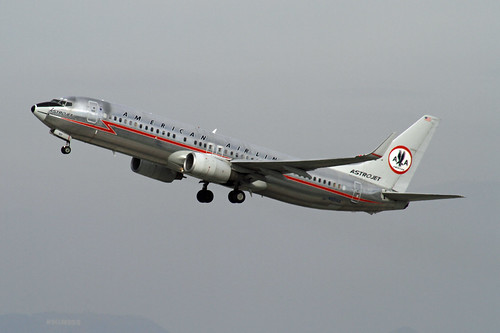
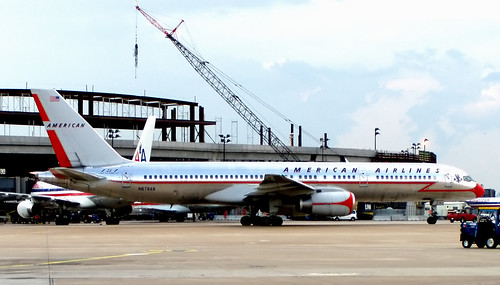
Chief Commercial Officer Virasb Vahidi at American Airlines says that American is engaged in studying how to modernize its brand going forward. Part of that modernization may come in the form of American Airlines embracing a livery change.
AA’s aircraft livery has been the same since 1967 which, even for an airline, is one very long time.
American Airlines has made the polished aluminum look a part of their brand since the DC-2 and has resisted adopting a fully painted aircraft for decades. However, new aircraft coming into the world aren’t made of aluminum and cannot be polished. Furthermore, while polishing aircraft instead of painting them saves fuel, it also increases the maintenance of the airliner as well. If it truly saved a great deal of money, other airlines would be doing it as well. They aren’t.
Would a livery update be revolutionary? I doubt it. I think we would likely see a white aircraft with a slight revised logo at best.
But if anyone at American Airlines is reading this, I vote for these looks instead:
Filed under: Airline News by ajax
1 Comment »
May 15, 2012 on 1:00 am | In Airline News | No Comments
It’s not a catchy name, in that form.
Last Friday, AMR/American Airlines capitulated a bit in publicly stating it would engage in examining the possibility of a merger with some other airline. This after beating a drum for 2 weeks that it was fine, there was nothing to see here and American Airlines was a better airline if it exited bankruptcy as a stand alone enterprise first.
The thing is, an airline in bankruptcy is answerable to many parties. It must answer to the courts and creditors and it must justify its decisions, particularly those related to bankruptcy, at every turn. There isn’t nearly as much maneuvering room to do what one wants to do in those conditions and I’ve often wondered over the past few months if that wasn’t the prime driver for Gerard Arpey’s decision to leave the company.
Is this a merger? Nope, not yet. But US Airways has played this very, very well so far. They’ve got the public support of unions and have managed to make themselves look more and more attractive to interested parties who aren’t tied to AA through employment or as a major creditor. The next steps will be to win over Boeing by reaffirming the aircraft orders made last year and to win over HP by reaffirming a desire to go forward with the new reservations systems. Not hard to do as any merged entity will need both the new aircraft as well as the new reservations systems.
My prediction is that we’ll see some sort of understanding between the two airlines some time in June. It will be about brotherhood and great synergies and that no one need to worry about their jobs. Worst case scenario sees Tom Horton elevated to non-executive chairman (and I doubt that that happens) with a small handful of American executives retained. More practically, Tom Horton leaves for a different industry and maybe 1 or 2 executives are retained for the new company.
The best part will be seeing the new livery for such a company.
Filed under: Airline News by ajax
No Comments »
May 13, 2012 on 1:00 am | In Airline News, Airline Seating | No Comments
American Airlines announced lie flat seats for its business class sections on 777-200ERs and 767-300ERs. The changes are to start in 2014 and I yawn. Part of this announcement made it clear that about half the 767 fleet will be retired going forward and it is easy to assume that means there is the expectation that the 787 will be rolling into the fleet. I’ll yawn again.
I think American Airlines made this announcement, in part, to distract from its rather ugly look that it has in its bankruptcy proceedings. Those US Airways announcement really put a hit on them and their hearings in New York regarding breaking the union contracts made them look worse. So why not announce new seats that won’t show up for several years?
Am I the only one who thinks of The Emperor’s New Clothes when watching American Airlines these days?
Filed under: Airline News, Airline Seating by ajax
No Comments »
May 11, 2012 on 1:00 am | In Airline News, Airline Service, Airports | No Comments
Southwest Airlines wants to build a small international terminal at Houston Hobby airport and thinks that doing so will benefit Houston with more jobs, more economic impact for the city and everyone wins. United (Continental) Airlines doesn’t want a damn thing going on at Houston Hobby and definitely does not Southwest Airlines beginning international flights from that airport. United thinks that allowing this will reduce jobs, have a negative impact on the economy and, well, HOUSTON SHOULD JUST DO WHAT UNITED WANTS BECAUSE WHAT’S GOOD FOR UNITED IS GOOD FOR HOUSTON.
It’s like watching Southwest Airlines and American Airlines fight over Love Field airport in Dallas.
Make no mistake, this fight is over competition. Southwest provides LCC competition on international flights from Houston to Mexico, Central America and the Caribbean and that is United Airlines’ major domain from that airport. In fact, those United routes are a huge profit earner for the airline. Of course United doesn’t want the competition.
Airlines, especially SuperLegacy airlines, hate competition. And they loath competition on the very routes that earn them the most money.
Here is my take: Southwest wants to introduce more flights to Houston Hobby. In the process of introducing international flights there as a kind of “hub” for SWA International operations, it will almost certainly introduce more connecting flights to more SWA focus cities such as Dallas, Atlanta, Chicago, Baltimore, Los Angeles, etc. This is a good thing. Southwest has a great product and one that isn’t going to negatively impact Houston.
United Airlines has major investment in their fortress hub at Houston Intercontinental from commitments made by Continental Airlines pre-merger. Houston Intercontinental is a fortress hub for them like DFW is a fortress hub for American Airlines. Fly into IAH and you’ll be amazed at how dominated that airport is by one airline. It is a crown jewel of hubs and the last thing United wants is an airline poaching customers from those routes. But one reason why those routes are so profitable for United is that there is virtually no competition.
Competition is good. Houston should allow Southwest to build its 5 gate international terminal. It will benefit Houston and if United isn’t quite so profitable there, so what? I don’t think there will be a massive increase in overall traffic to international destinations served by both airlines a la “Southwest Effect”. I do think that SWA will poach quite a few customers locally and I say that what benefits the businesses and private parties of Houston is far more important than whether or not United gets to have its cake and eat it too.
The airlines are actually similar in labor costs but SWA maintains higher productivity. It’s not as if United doesn’t have a fighting chance against SWA, it does. For one, it has a frequent flier program that will be stronger for Houston residents most likely and it has the ability to feed as much traffic as it wants through Houston to southern international destinations.
The one party here that I do not think gets hurt with this is the city of Houston.
Filed under: Airline News, Airline Service, Airports by ajax
No Comments »
May 9, 2012 on 1:00 pm | In Airline News | 1 Comment
The Los Angeles Times has this story about American Airlines actively prosecuting its AAirpass holders for fraud. Purchasers of the AAirpass essentially paid big sums of money for an unlimited, lifetime first class pass and many bought them in the late 1980s and early 1990s. They actually made financial sense for some and some purchasers used them in ways that American Airlines never conceived of.
Personal note: When playing the “what if” game on what one would do if one won the lottery, I always said that I would want an Airpass first above all other things.
Filed under: Airline News by ajax
1 Comment »
May 9, 2012 on 1:00 am | In Airline News | No Comments
Israeli’s President, Shimon Peres, balked at extra fees for things like carrying oxygen tanks from El Al for a state visit to Canada and decided to book his flight on Air Canada.
This is a perfect example of why El Al doesn’t work too well as a state airline of Israel.
Filed under: Airline News by ajax
No Comments »
May 8, 2012 on 1:00 am | In Airline News | No Comments
US Airways has announced new routes from its Philadelphia hub to Austin and San Antonio as well as adding a 6th frequency to DFW airport as well. This is, without doubt, an attempt to put more pressure on AA in its merger quest and demonstrate that the airline can satisfy travelers in Texas.
Consider that US Airways is pointing out that it already competes admirably on a trunk route like DFW to PHL. This is an argument that service they provide is up to American Airlines passenger standard and exceeds them more than likely.
Putting direct flights in to San Antonio and Austin is also a statement that it intends to move into Texas and do well whether American Airlines wants to cooperate or not. Those two cities provide an exceptional amount of “feed” into DFW and US Airways is going to try to poach that feed with direct, non-stop flights.
These are bold moves and designed to get the attention of American Airlines. If AA responds with its normal “we’re not bothered” statement, I think they’ll find themselves subject to scrutiny from both creditors as well as its board of directors. You can only ignore the elephant in the room for so long.
Filed under: Airline News by ajax
No Comments »
May 7, 2012 on 12:18 pm | In Airline News, Airline Service | No Comments
American Airlines’ PR machine continues to beat the same drum on how they’ll succeed exiting bankruptcy as a standalone airline. The story is that they’ll fly considerably more international flights, do even more code sharing and partnering with existing Oneworld airlines and “right size” their flying with the new fleet they’ve ordered.
And everyone else keeps saying that ain’t gonna get it done.
Analysts don’t like the extremely aggressive growth being spoken in the plan because it reflects above industry average in growth when capacity restraint has shown that that is the pathway to reliable revenues. Growth may only come from one thing: Exiting bankruptcy with such superior labor costs that it can undercut other SuperLegacy airlines on price and start a fare war. That would anger just about everyone in the business.
Codeshares have been touted by AA for several years now but AA never seems to aggressively capitalize on these codeshares. It adds some incremental revenue here and there but the additions never seem that strategic and even its codeshare and interline partners seem inclined to poach on AA’s turf right now. There is, after all, a reason why both JetBlue and Delta Airlines have added flights between NYC and DFW: AA is vulnerable and, frankly, not doing a good job of keeping the interest of its business travelers.
International flying is more profitable and American Airlines has ordered the aircraft for increased international travel in the form of 777-300ERs and 787 aircraft. It has not managed to achieve a contract for those aircraft at all with the pilots union and seems to have forgotten that it couldn’t manage an acceptable agreement with the pilots to add a new route between Dallas and China a few years ago. What makes it think that pilots and other aircrew are going to agree to more flying internationally on these aircraft without some concessions? It’s a bargaining chip that the unions have and will use.
Finally, nothing in the business plan addresses what are fundamentally important issues for the airline presently. It performs much worse on the revenue side today because it has older, less pleasant airlines, a website that just angers more than serves its customers, service fees that seem hostile towards a customer and a service staff that seems intent on delivering a cynical and lackluster service product to its passengers.
Where is the plan to upgrade aircraft into a pleasant experience? Where is the plan to get employees happy again to serve their customers? Where is the website that, you know, allows you to prepay for a checked bag when checking in online? Where is the rational fee structure that makes sense and an implementation that doesn’t feel like extortion to the passenger?
You can beat the same drum hoping to get people dancing to the beat but if the beat is awkward and without rhythm, no one is going to join you on the dance floor.
Filed under: Airline News, Airline Service by ajax
No Comments »
May 2, 2012 on 1:00 am | In Airline News | 1 Comment
Delta Airlines bought a fuel refinery in New Jersey that has the ability to provide as much as 80% of all their fleet fuel needs and which has direct connections to both JFK and La Guardia airports by pipeline. Most airlines hedge their fuel costs by purchasing fuel oil contracts which happen to track closely in price with the cost of jet fuel (which isn’t sold with market contracts). It offsets price spikes and makes fuel costs more predictable and manageable.
Delta’s purchase of the Phillips66 refinery is an interesting move. The cost was relatively low $150million for the purchase and an additional $100million to fully convert the refinery over to jet fuel production. To an airline, that’s pocket change. To Delta, that means they can cut out a significant portion of the middle man in their fuel costs.
How do the fuel the fleet from New Jersey only? They don’t. They’ll supply their own fuel to their own aircraft in the NYC area, yes. That fuel demand in that area alone will find Delta saving big dollars. They’ll also sell that fuel to other airlines at those respective airports at a profit which will then offset Delta’s fuel costs in other parts of the country. It’s a way of hedging prices more closely to the market prices for jet fuel and gives them an assured supply in a market that has historically been a bit touchy on prices.
Filed under: Airline News by ajax
1 Comment »
May 1, 2012 on 1:00 am | In Airline News | 1 Comment
Here we go again. United Airlines CEO Jeff Smisek has done very, very well in creating the world’s largest airline between his merger incentives and compensation. Well enough to anger unions who represent labor forces that are touchy about executive compensation already. His executive team has also done extremely well.
But UA still isn’t consistently earning money and it has had a rockier time in integrating the operations of United and Continental airlines. Mot recently, the reservations migration provided a less than stunning experience for customers.
The standard for smooth mergers remains Delta/Northwest and one can hardly expect all of them to go that well. But it will leave people asking if, once again, airline executive teams aren’t getting compensated a bit prematurely as well as for milestones that don’t show a consistently profitable airline.
Filed under: Airline News by ajax
1 Comment »
|
|
|

