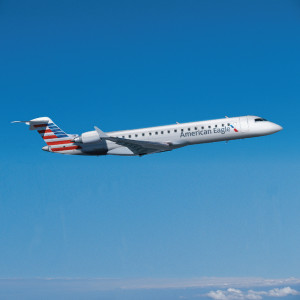
There is an anti-trust hearing on the US Airways / American Airlines merger and, as is common, Congressmen are voicing loud concerns about air fares rising and loss of hubs. This does, at first glance, make them seem For The People but . . . are they?
I’m not a free market capitalist. In fact, I’m pretty moderate in my views on business in general and regulation. I think some regulation is extremely important. I think the financial meltdown of 2008 is the most evidence that anyone needs for a decade or two.
It is ironic that I find this merger more satisfying on what is going on with this merger. In previous mergers, it really was clear that certain hubs would be downgraded to focus cities at best. For instance, the close proximity of hubs in Memphis, Cincinatti and Atlanta made it pretty certain that Memphis and Cincinatti would be sacrificed for Atlanta no matter what Richard Anderson told Congressional committees. I think the same ultimate outcome is quite likely for Cleveland in the United / Continental merger.
In this merger . . . I can’t see hubs going away. Assumptions being made about Miami being superior, potentially, to Charlotte causes me to laugh. Charlotte is a far more strategically important hub on the domestic front. Miami is and will remain a gateway city for all destinations south. If I question anything, I question how things will work out between Phoenix and Los Angeles. While I believe both will remain much as they are in many respects, I’ll concede that things are murkier their. I think Los Angeles becomes a gateway city and Phoenix becomes a domestic hub. Much the same is true between Philadelphia, New York City and Washington D.C.
But, bottom line, I don’t see hubs getting reduced in this merger.
As for air fares rising? Well, they may well go up some. They may well not. Here is the critical question in my mind: Why are air fares that prevent airlines from earning a return on investment that is great enough to cover the cost of capital something we don’t want? In other words, why might it be desirable for airlines to be market limited to air fares that don’t earn them enough profit to be a viable business over the long term?
Consolidation in the marketplace is largely due to the fact that we deregulated the market side of the airline industry but never deregulated the labor side of the industry. Airlines needed more market power and then finally figured out how to do it effectively.
Let’s not bash airlines for raising air fares when the industry has lost Billions (with a “B”) of Dollars over the past decade. Our response, ordinarily, would be if you’re losing money and your cost competitive, you need to raise your prices.
Air fares have gone up in areas where they were unprofitable. Unprofitable city pair have moved into profitable territory in many cases. That is as it should be. Bargain basement fares designed to win market share instead of profit are probably gone for a long, long time. It was nice while it was here but let’s not kid ourselves into believing that those kind of fares are what we deserve.
However, there are many markets and city-pairs that were earning excessive profits which are now experiencing real competition for the first time as a result of these mergers. Those fares are going down as they should be. One great example is American Airlines “owning” the DFW/NYC city pair and now . . . not so much. They have some competition, fares have gone down and it is far more reasonable to fly that route than it has been in a long, long time.
Were I to respond to Congress about claims of higher air fares, I would say something like this:
“Absolutely air fares are going up as a result of this merger . . . in some markets. And they should go up because we are not earning a business appropriate profit in those markets.
However, air fares are absolutely going down in other markets because you now are going to have very big, very powerful airlines that will need to compete hard on routes in order to support business growth. We will experience more competition on more routes over time and higher yielding fares will go down as a result.
Businesses are in business to earn a fair and reasonable profit and let’s not vilify that intent.”
And let’s be cognizant of that last statement. There are a lot of businesses who earn an unfair and unreasonable profit and even do so with massive government subsidies. The oil industry is one that comes to mind with some companies earning profits that are greater than the GDP of some small nations.
The airline industry, on the other hand, really not only isn’t subsidized but is probably overtaxed in many ways. In fact, I would seek to start a dialogue on the fact that despite economic benefit accruing to entire communities, only users are taxed and heavily so. Airports, for instance, are public infrastructure that offer benefits yet we seek to fund them with taxes only on users. Highways are public infrastructure too but we tax everyone, not just users, for them because the benefits accrue in many ways.
But the airline industry is most inept at making such arguments and generally resorts to a “crouch” position when dealing with most things. When they do bow their backs at government, they often overplay their hands as well. It’s an industry that could learn something from the oil business. . . or corn growers.
A Chinese Communist Party and mining manager missed his flight in China not once but twice. The second time was because he and his family were eating breakfast in the airport and missed the calls for departure. What did he do? He went nuts and violently dismantled the check in area.
Boeing has made a proposal to the FAA that would provide an interim fix to its 787 battery and wants the FAA to approve the idea and allow recertification testing of the solution to start. The NTSB is not due to issue its own report until late March but it is reported that Boeing wants to get the aircraft flying again by April.
I have mixed feelings about this proposal for the simple reason that an interim fix is comprised mainly of “toughening up” the battery with additional steps taken to prevent and/or contain thermal runaway. No one has said why these batteries are being challenged more than they should be.
On the other hand, it’s notable that the 787 aircraft built today comprise 50 aircraft plus a rather substantial test fleet that managed to fly many cycles and many different profiles before two successive battery events. This doesn’t mean there isn’t a problem but it does cast doubt, in my opinion, on the problem being the actual battery.
Even if it isn’t the battery itself that is the problem, extra containment strikes me as wise.
It seems that if Boeing wants to come out of this latest problem with any credibility, it really should be prepared to indicate exactly what the problem is and what not only the interim fix is but what the final fix will be. When you have both pieces of information, that’s when you ask for an interim fix. Right now, it is unclear if anyone understands the exact root cause of the problems.
I’ve had it suggested to me that Boeing must understand the root cause given their application for an interim fix. If it were 10 years ago, I would agree with you. Today, I think Boeing and, in particular, it’s executive leadership, have not held to Boeing principles on finding solutions to problems. In light of that and as much as it pains me, I think it wiser to wait until the root cause is understood before approving a fix to the lithium batteries.
A better alternative interim fix, in my opinion, would be installation of a safer battery technology. I’m sure Boeing doesn’t want to engage in this because it would require other changes to other systems. If Boeing hasn’t made this their Plan B yet, it really shakes my confidence in their ability to solve problems.
A comment found on Executive Travel’s website and made about the A380:
“Actually, there’s no difference between flying 30 passengers and 526,” says Harald Tschira, a Lufthansa first officer.
The main differences really center on what you have to learn about the systems of the aircraft. On a larger aircraft, there are more systems to learn than, say, on an Embraer ERJ-140. But the flying and, most specifically, the act of preparing for departure, flying a route and landing, is pretty much the same from one aircraft to another.
The idea that a larger aircraft is more difficult to fly is also specious. It’s not. In fact, large aircraft can often be easier to fly than smaller aircraft.
Upgrading into larger aircraft is often a large benefit for pilots because it means they’re flying flights with more hours / flight which means they have to fly fewer flights overall each month.
Nominally, you are putting more experienced pilots into cockpits of aircraft carrying more people and that might mean you have fewer accidents where there are a large number of casualties. But I really don’t think that is substantiated by statistics. When aircraft crash, they’re of all makes and models. The Air France Airbus A330 disaster was a total loss of life, for instance. Theoretically, that aircraft was staffed by very experienced pilots who all did the wrong things to recover the aircraft.
Is there a huge difference between the aircraft of size and regional jets? No, not really. A qualified pilot could fly either with the existing training. Is there a reason to have the most qualified pilots on the largest aircraft? No, not really.
So why do we do it? Because that’s the way it’s been done since before airlines were profitable. There was a correlation between an experienced pilot and his ability to fly a larger aircraft when airplanes were not automated. Today, aircraft are all much more automated and have far better instrumentation which levels the playing ground.
A couple of days ago, US Airways CEO Doug Parker and US Airways EVP Elise Eberwein went to go talk to a join meeting of the Allied Pilots Association (AA pilots) and US Allied Pilots Association (US Airways pilots). They attempted to address concerns and foster a new relationship that would see a smoother merger get executed.
Let’s take a moment and think about this. The soon to be CEO of American Airlines Group and a trusted US Airways executive in charge of People traveled to answer questions and address concerns to unions that will be involved with the new company.
Do you think that move would have been made by an American Airlines team? For instance, do you think anyone bothered to go talk to TWA unions when AA bought them as an asset sale? Do you suppose that Don Carty went and talked to the Reno Air people when they got bought?
You didn’t even see these kind of overtures being made when American Airlines needed a deal to stay out of bankruptcy just a little over a year ago. I would imagine that the pilots from American Airlines may have had a slightly stunned look on their face.
I saw today’s Cranky Flier mentioning a pretty disturbing incident experienced by Matthew of Live and Let’s Fly Blog. This isn’t a case of United beating the stuffing out of a guitar or American Airlines picking a fight with an actor. This is, in some ways, worse.
Because it wasn’t a mistake. It was abuse of a passenger.
I’ve witnessed this kind of bullying. While I’m unaware of the exact flight attendant or captain, it’s symptomatic of what is a general trend in the airplane these days. Control by bullying.
This passenger presents a potential challenge for me because he’s knowledgeable about what he can and cannot do and he’s willing to question my authority on certain issues. Off he goes by any means possible. Captains are now very reticent to tell flight crew to grow up and act like adults because there is a bit of a culture of protection that exists among flight crew that can result in blow back on him.
I believe the blogger and while the Captain and Flight Attendant in this situation might have a different viewpoint of sorts in all of this, they don’t really have an excuse, do they?
This wasn’t done to this gentleman out of an abundance of caution. It was done to punish and control and it was an abuse of authority. Is that what we pay for when we buy a ticket to travel somewhere?
And if this kind of thing happens to high mileage frequent fliers who write blogs, what is happening to economy passengers that is going unreported?
People who lie to control their own customers are abominable and should suffer consequences within this company. People who don’t exhibit courage enough to arbitrate a situation involving a customer that clearly has not gone out of control are abhorrent and should be retrained in leadership before being permitted to command an airliner again.
Over the past 2 or 3 weeks, mainstream media has often made statements that the merger between American Airlines and US Airways was going to lead to less competition and higher prices. A number of generic talking heads make it sound as if this is a no brainer.
Is it? I’m not so sure.
Fares are up over the past 4 years, without any doubt. Are these fare increases due to less competition? I think that argument is rather simplistic. I think that, among the airlines, capacity discipline has resulted in higher air fares far more than reduced competition. There is a new generation of leadership among the airlines who rightly identified that grabbing all market share was insanity and focusing your business on routes that provide a real return on investment was far wiser.
And it’s worked. Richard Anderson of Delta, Jeff Smisek of United, Doug Parker of US airways and even Gary Kelly of Southwest Airlines have all focused intensely on managing capacity of their airliners. If capacity needed to be increased, it was done by upscaling the airliner serving the route slightly rather than by adding an entire new flight to a route. These men have managed capacity growth at their airlines with great discipline.
In many cases, fleets have contracted in count but maintained neutral or ever so slight positive capacity growth with upscaling. An example of this has been Southwest adopting the 737-800. They are growing capacity, where needed, by introducing the 737-800 to routes with that demand. They are replacing seats on the 737-700 to grow that capacity from 137 seats / aircraft to 143 seats without impacting seat pitch. This is wise, conservative capacity discipline and it has led to significantly increased ability to raise fares.
Airlines have also been far less reticent to enter markets that have been dominated by legacy airlines in the past. Virgin America identified opportunities on routes to and from Dallas and Chicago, for instance. They’re squarely aiming themselves at American Airlines and United Airlines and just a few years ago they would expect a capacity fight from those legacy airlines. Today, those same legacy airlines aren’t fighting back by dumping capacity and below cost fares onto the routes. (Or at least not nearly as they once did.)
Delta has been quite willing to start routes against airlines such as American Airlines (NYC to DFW, for instance) when there has always been a unspoken agreement that AA owned that route and no one would bother them over it. Just as Delta had Atlanta to NYC and Northwest had Minneapolis/St. Paul to NYC.
The competition is there and it’s not only putting pressure on prices, it’s putting pressure on the right prices. Those routes previously dominated by a single airline who was charging fantastical prices even for economy seats are now being challenged by equal airlines which are lowering high fares.
No, low fares aren’t being made lower. Yes, in many cases low fares have gone up significantly. They should have gone up as they reflect a very marginal business case. Under the new rules, those routes must independently earn a return on investment or they aren’t worth it. The choice at that point is to raise a fare or quit the route.
And because costs are now more or less aligned across the industry, all need to raise fares and there is a harmony in that. Those costs will, over time, start to diverge some and when they do, the advantage will go to those with lowest costs. Right now, the advantage goes to those who are most productive within the cost structure.
Southwest, for instance, is most productive despite the fact that they have some of the highest costs of any airline in the US now. It’s their advantage and as long as they maintain it, they’ll succeed well. It allows them to stay on parity with their competition and it allows them to cooperate with fare increases.
It’s daunting when an airfare goes up $100 to fly somewhere. On a personal level, I feel that pain too. I fly far less today than I did just 5 years ago for just that reason. But . . . costs have gone up everywhere. We, as individuals, see significant increases in our costs on a daily basis. Gasoline is far higher today and so are things such as milk and even meats. Electricity costs more and so do things like car tires. We shouldn’t be surprised that costs are higher at airlines requiring more money to exist.
Aviation and airline consultant, Richard Aboulafia, has written about re-thinking his position about Boeing after many years of seeing Boeing as a stronger company. This is no small thing, in my opinion.
Aboulafia makes several good points about how each company has evolved over the past decade or more. Airbus has built a stronger and stronger company both on profits but also on making the right business case. While I think Airbus has gaps in its products, I also think that Airbus has also been the leader in arguments for and against aircraft for the past 15 years.
Boeing has been been reacting to Airbus on many different levels since the mid-1990’s. The last leadership Boeing has displayed on aircraft is the 777 and, let’s face it, that aircraft had the benefit of being last to market in the contest between Boeing, McDonnell Douglas and Airbus.
Boeing created the 737 Next Generation aircraft line in response to the Airbus A320 series line and while Boeing made a business case for its 737NG, it was based essentially on being a legacy aircraft that was cheaper to operate. It wasn’t based on being the better aircraft. There is a reason why Airbus has made so many inroads in the United States over the past 15 years and it isn’t because they have an inferior, more costly product for operation.
Not only did Airbus suck demand away from the Boeing 767 line, it managed to eat away at 777-200 sales as well and did it all with the A330-200/300 series aircraft. The A330 not only was a better response to the 767, it also was more “right sized” for almost all of the routes being served by 777-200 aircraft. It offers excellent fuel economy, excellent operating economics and continues to not feel old or dated. That’s no small achievement in a business where you get to create a new product for a demand maybe every 20 years or so.
While I think the A380 is an ego project with a future that is far more limited than what Airbus / Emirates believes, they’ve got the aircraft flying and doing so very reliably. They also killed most of the remaining demand for the Boeing 747. The 747-8i is not going to be more than an ultra-niche aircraft. It might be a little more in demand than the 747-SP and it might attract cargo companies for a few more years but it very, very clear that the A380 killed the 747 pretty effectively. If nothing else, Boeing no longer has the massive profit generator that the 747 once was and that’s significant.
What has Boeing done in the last 15 years or so? It got the 717 and killed it in the hopes that it could sell more of the 737-600. That didn’t work out so good and it’s notable that the 717 continued to be a very effective money-maker for those who have owned it.
It’s provided winglets and PIPs (performance improvement package) to the 737 series which have kept it in the game against the A320 but only just so. And when Airbus defined the airlines needs with the A320NEO, Boeing stumbled around for a year and gave us the 737MAX when it could have forced Airbus to abandon the NEO by announcing an all new 737 replacement.
The 767 is sold in tiny quantities still but mostly it was kept around to win the KC-46 tanker program. Boeing is selling the United States a bargain tanker replacement but one that is based on an airframe that is about 30 years old. Think about that. Now think about how long the Air Force kept the KC-135 tankers so far.
The 787 . . . well, this aircraft has plagued Boeing with some pretty bad PR to date. It’s yielded some good PR, too, but it’s really exposed Boeing for what it has become: A committee managing an aircraft business on the basis of extracting the last bit of value possible from tired products. The committee decided it could let everyone else do its job and design its next airplane and that hasn’t worked out so well.
The 747-8i? Niche aircraft, old design, not attractive to most airlines and compared to the 777-300ER, just not up to the job as much as airlines seem to want.
The 777-200/300 is 20 years old and the Boeing Committee’s plan is to push away doing anything with it for another 7 years. This despite the fact that airlines have directly and positively responded to a refreshed, stretched design. Airlines are entirely willing to have a re-winged, stretched airframe with enhanced engines. Not only willing but nearly clamoring for it. Boeing’s response? Yeah, yeah. When we get to it.
The 787-9 is being built now but too slowly. The 787-10 hasn’t really been aggressively pursued despite the clear encroachment of the A350 series into this territory.
My point is that Boeing is slowly and methodically ceding strengths to Airbus. While Airbus may not be the best governed, best run aircraft manufacturer, it is at least making every effort to to execute with excellence. That excellence is embodied by good engineering, good value and modern technology.
So, yeah, I agree. Boeing just isn’t the company that it was and should be. It lacks visionary leadership. It lacks engineering leadership and it lacks self-honesty at this point. It can continue as a company for many years to come but it isn’t going to be the Boeing we remember. It isn’t going to be the Boeing we keep willing it to be. It’s going to be that company that makes things but which slowly lets its lifeblood ooze out to others. Or at least that’s where I think it will go if it doesn’t acknowledge the need for improved leadership and more risk taking.
Some would say that Boeing took too much risk with the 787. I would respond that they farmed out all their big risk to others and looked to cash in with everyone else sharing that burden. They now have realized a great deal of risk, yes but how much of that could have been avoided altogether if Boeing had just built the damn thing as it had with previous airframes? And how hard would it be to answer tough questions about a battery and charging system if you had designed the thing yourself?
And how many more times is James McNerney (chairman and CEO of Boeing) going to declare publicly that his company is a great company and his 787 is a great airplane without acknowledging the very real problems that sit on his doorstep?
I saw a story on Slate.Com about a rant regarding reclining seats on aircraft. It’s an issue near and dear to my heart.
Many airline industry enthusiasts defend the airlines when it comes to offering reclining seats. This camp makes the specious argument that the seat is paid for so the passenger can do what they want. This argument takes place on airliners owned by Ultra Low Cost Carriers such as Spirit Airlines as well as SuperLegacy airlines such as Delta.
Some can’t understand where the problem really came from because it wasn’t a complaint 20 or 30 years ago. It really wasn’t. Of course, 20 or 30 years ago the seat pitch in economy seating wasn’t an average of 31 inches either. It was actually as much as 34 or 35 inches or roughly about what Economy Plus is being offered as today.
Another area where the argument gets lost is the different experiences that different people have with reclining seats. Shorter people tend to not notice it nearly as much as taller people. I’ve actually had women tell me that they find it more intrusive because they have breasts! The truth is that even one inch can change a seat experience entirely.
What I find miserable on an American Airlines aircraft (31″ of seat pitch), I find perfectly acceptable on a Southwest Airlines aircraft (32″ of seat pitch). Yes, one inch makes a big difference to many people.
Should seats in economy class be stopped from reclining? I think they should. We’ve made the seating area so restrictive at this point that people taken as a whole group will be more comfortable and less contentious on a flight with the recline feature disabled. Leave it on Economy Plus seating but remove it from Economy seating. In fact, design and buy seats with the feature never existing. I suspect we’ll seat a weight savings that is significant enough that with 137 economy seats on a 737 with that feature removed will translate into real annual savings on fuel.
More importantly, we’ll see fewer conflicts and fewer bad attitudes. Most of the conflicts I witness onboard an aircraft center on someone expressing their perceived constitutional right to recline a seat in the back of the airplane. Reducing conflicts onboard an aircraft are very important, in my opinion. Remove the flashpoints of contention and you potentially raise the perceived service experience.
One other thing: You didn’t pay for the seat on the airplane. In fact, you simply contracted with the airline to transport you from point A to point B. The next time someone expresses their discomfort with your reclining your seat, show some polite consideration instead of being a snarling jerk. It’s not the way you would have acted in virtually any other place so why act like that onboard an airplane?
This has absolutely nothing to do with the airline industry. It does, however, have everything to do with aviation. James May Toy Stories builds a large glider and sets a record and does it while having great fun. Enjoy it, I did.
The US Airways / American Airlines merger should inspire Southwest Airlines to search for opportunity in this union. Southwest’s ability to do business in the Dallas Fort Worth area has been constrained by American Airlines for more than 20 years.
The argument that Southwest has rid itself of the Wright Amendment at Love Field may come to mind, I would argue that they remain fairly constrained at Love Field and particularly so when compared to other high density metropolitan areas such as Chicago.
For instance, the maximum number of gates at Love Field were reduced from 32 to 20 and Southwest is limited to using just 16 of those gates. The other 4 go to SuperLegacy airlines (of which American Airlines is one.) Furthermore, if Southwest were to introduce any services at DFW airport, it would lose gates at Love Field.
It’s a deal with the devil that got made because of political considerations instead of reality. I wouldn’t criticize Southwest for making the deal but I would urge that the deal be revisited at this point.
Frankly, I would urge that Southwest being penalized for instantiating services at DFW be changed. The truth is that Southwest has been boxed into this area for decades and while a successful strategy for Southwest, it has impacted competition in the DFW area. American Airlines owns DFW as an airport like few hubs are.
Southwest is now seeing competition from both ULCC carriers such as Spirit and SuperLegacy such as American Airlines. It fills a niche that more would like to enjoy. But the idea that people in Fort Worth avail themselves of Love Field for Southwest fares is a bit amusing to me at this point. They just don’t.
The legacy airline playing field will be leveled with this latest merger. In fact, 4 airlines will dominate the landscape when it is completed:
Delta Airlines
United Airlines
American Airlines
Southwest Airlines
I think it’s time we stop listening to the economic arguments made by the first 3 now that they all enjoy costs that are as low or lower than Southwest. Instead, let’s start promoting competition between those airlines like we never have before.
When Tom Horton leaves the merged American Airlines Group in a little over a year, he will leave with just shy of $20 million in compensation. Half of that will be cash, half will be in stock. Between now and then, Horton will continue to serve as CEO of American Airlines until the merger deal closes in about 6 months or so. His duties will include preparing the company for integration and providing leadership on merger activities as well as being a careful conservator of the business itself.
After the merger deal closes, Doug Parker will take on those responsibilities for the combined airlines will operate as American Airlines Group. Horton will continue on as non-executive chairman of the board for American Airlines Group and serve in that role until the first annual shareholder meeting after that (expected to be May 2014.)
Horton has served as Chairman and CEO of AMR for just over a year to date. He has arguably done a very good job on the cost restructuring of AMR during bankruptcy. He has basically served best as the man he is: an excellent CFO.
A $20 million kiss goodbye is too much. The rewards here are inconsistent with length of term and inconsistent with his role in the merger. I strongly suspect this merger took as long as it did because the AMR board has been pushing hard to compensation like this for Horton and others.
This deal is also a bad example to be set for unions who just got beat up very badly in the bankruptcy process. It’s a bad example for all employees and it will be very hard for them to swallow this, I think. Sorry but when a company has entered into bankruptcy and you had a role in that direction (and Horton did have a role in it), you shouldn’t be rewarded this way for brutally abusing both creditors and employees to reposition the company. Bankruptcy means you are unable to pay your debts and need to reorganize yourself to do so. Let’s not forget that.
High compensation should come after successful performance of the company. That period of performance should be between 3 and 5 years after the merger. I think this compensation will badly hurt feelings among the unions and potentially put Doug Parker in a very sticky place on his first day as CEO of the new company.
And, frankly, I think there is too much credit taking and too much “setting the record” straight going on with Horton. Methinks he doth protest too much. And I think he doesn’t acknowledge his role in what happened in the first place. See this Dallas Morning News Story. I find myself asking when does someone in AMR leadership take responsibility for what has happened with employees and the company.
I also think it poor sport to publicly accuse your replacement of poor behavior on the very day your endorse his abilities.
OK, OK. I realize that the US Airways name goes away but I like the double strong US flavor in my made up name for the merger.
Many people will point out many potential trouble areas in this merger. I’ve got some that I think may get overlooked a bit in the conversation.
First, American Airlines’ employees desperately need to be focused on over the next year. This is a group of people who are very sour on their own company and they didn’t get there in a day. It is extremely rare to meet an AA employee who isn’t pretty bitter about their company, at least in private conversation.
A big part of the problem has been leadership neglect but it’s also been a lack of clear, direct communication (which is arguably a part of leadership) on a very regular basis. In fact, historically, the company hasn’t really said much to its employees unless something hit the news or something was about to look bad. I’m reminded of how Gerard Arpey would make communications that would spin the company in odd ways just before he and his executive staff were about to be awarded yet more stock options for a lack of performance.
As an employee, you can take that weirdness now and then and let it go. When it just assaults you for years, you lose hope.
So this is a chance to instill hope in these people and it’s a chance to show them that it is a new day by delivering on promises. I’m actually not worried too much about Doug Parker’s ability to do this but I am worried that between now and the deal closing (6 or more months most likely), he’ll be effectively silenced and the old regime will continue on the same path. I hope that communications at both companies are clear, concise and voiced with equal fervor and I truly hope that Tom Horton dials back his presence in this in the very near future.
There is a deal. Each party has its roles defined. Everyone needs to speak with one voice.
I’m actually not worried about how this team harmonizes the systems. I think they’ll figure that out without much problem. What I do worry about is how they create a new identify. This isn’t going to be US Airways and this isn’t going to be American Airlines and that’s that. This team has to decide what the new airline really will look like and what’s consistent with the marketplace. They have to identify core strengths and value propositions that exist today and figure out how to bind them together into a product that the customer wants.
In addition, they have to truly fix the basics of the operation at AA. There is a lot of underperformance going on and turning that around is no small task. At the end of the day, the customer wants flights that leave on time, flights that arrive on time and baggage that shows up on time. Then they want a value oriented price.
The truth is, new planes don’t fix the inability to operate as advertised. People fix that. Until the New American is operating in a consistent, predictable way across the system, leave out the branding hype.
Finally, get rid of that new branding. At least the livery. Pause *everything* in that area asap. Wait until the operations are fixed and wait until you have decided what the New New American really should look like. Then, take what’s good and go get a re-design on what isn’t.
Your corporate branding should very clearly reflect what you are selling to the customer.
I’ve been reading the news accounts of the merger announcement this morning and so far I haven’t seen anyone acting luke warm over this announcement. The usual spin is going on about hubs being maintained (probably true) and jobs being preserved (probably not as true, at least with respect to jobs in corporate or support roles) and how excellent everyone is.
One item I’ve noticed: Tom Horton seems to always refer to Doug Parker as “my good friend”. So much that I wonder if the knife is going to sink slowly or quickly into Parker’s back. It’s overdone.
Top Level Summary:
The Pilots: Yea!
The Flight Attendants: Yea! (AA at least)
Other service labor: yea!
They expect the deal to be worth about $11 Billion and it will require regulatory approval and bankruptcy court approval. It’s expected that it will take about 6 months to close the deal formally.
Tom Horton stays as non-executive chairman temporarily until around May 2014. Then Doug Parker takes over and the board member count drops from 12 to 11. AMR gets 3 board members, US Airways gets 4 board members and the balance come from creditors.
This isn’t a merger of equals. While it is a merger, it’s a merger where the little guy swallows the big guy. The advantage in this merger is that the little guy knows the big guy’s business and culture pretty well.
Now, with the deal made, there is a lot of work to be done not just in integration but in planning where to use the large numbers of new aircraft due in from both Airbus and Boeing.
There has been a lot of focus on this merger but curiously no one has noticed the potential effect on another Texas airline: Southwest. I’ll be writing more about that soon.
US Airways and American Airlines will merge and the announcement will be made early tomorrow morning. Doug Parker will be CEO and Tom Horton will be non-executive chairman of the board.
We like that they are merging but we don’t like Tom Horton’s presence in this because even a non-executive chairman wields influence and is able to engage in second guessing a CEO. Doug Parker will be doing things very differently in this airline and that’s liable to create opportunities to sow dissent.
This will create the world’s largest airline but it won’t be the world’s strongest. There is a lot of work to be done to be that airline and Delta CEO Richard Anderson is unlikely to make it easy for anyone to topple his airline.